
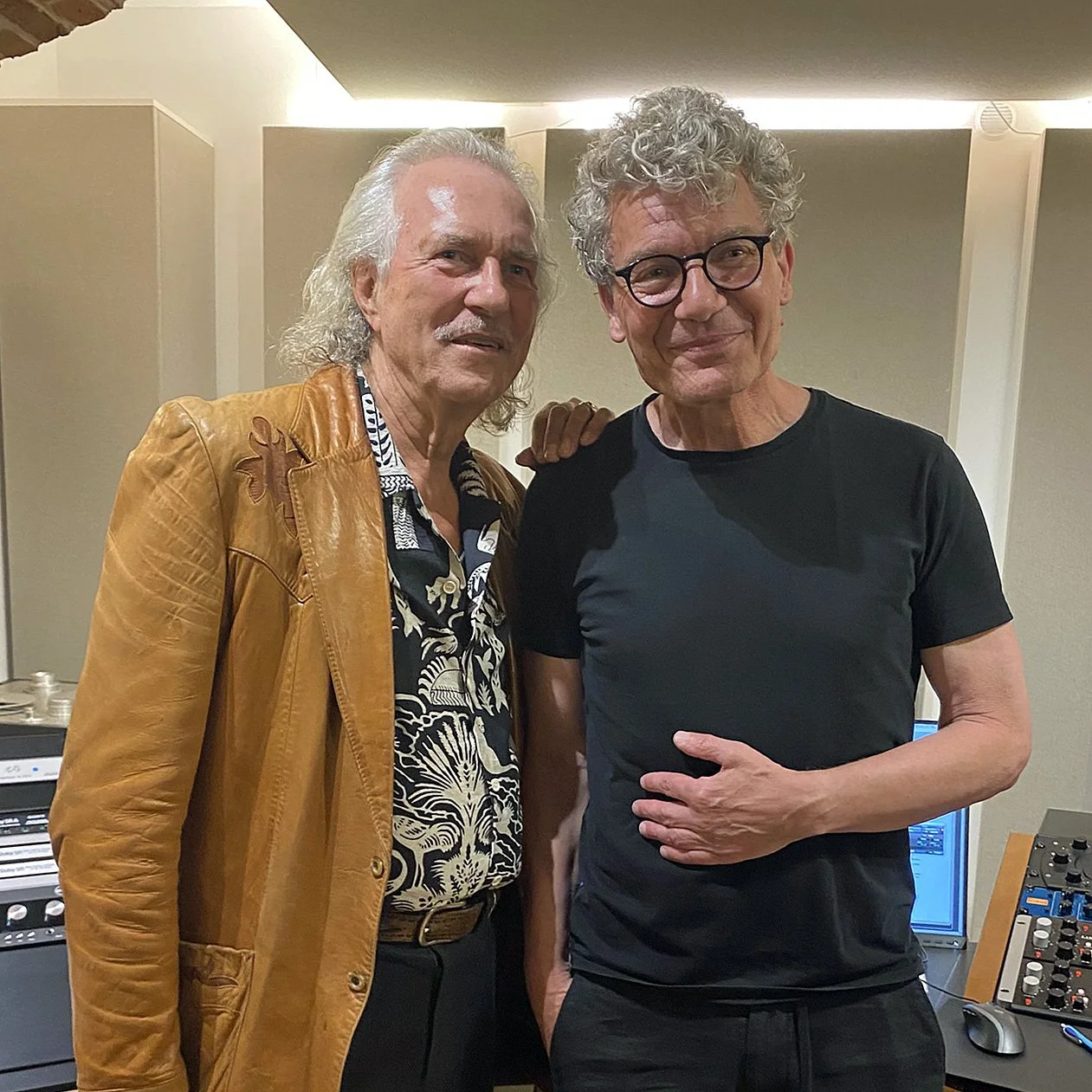
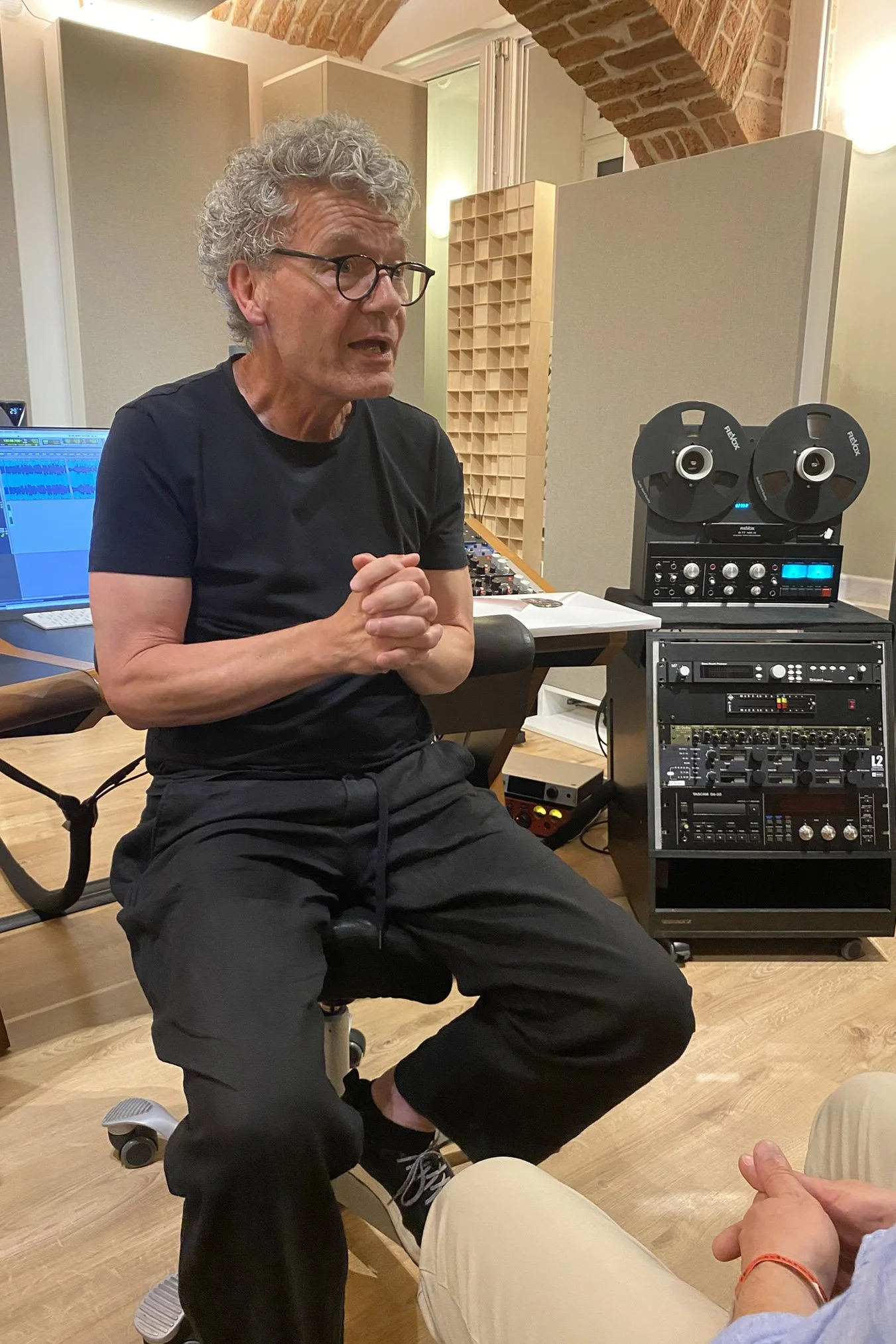
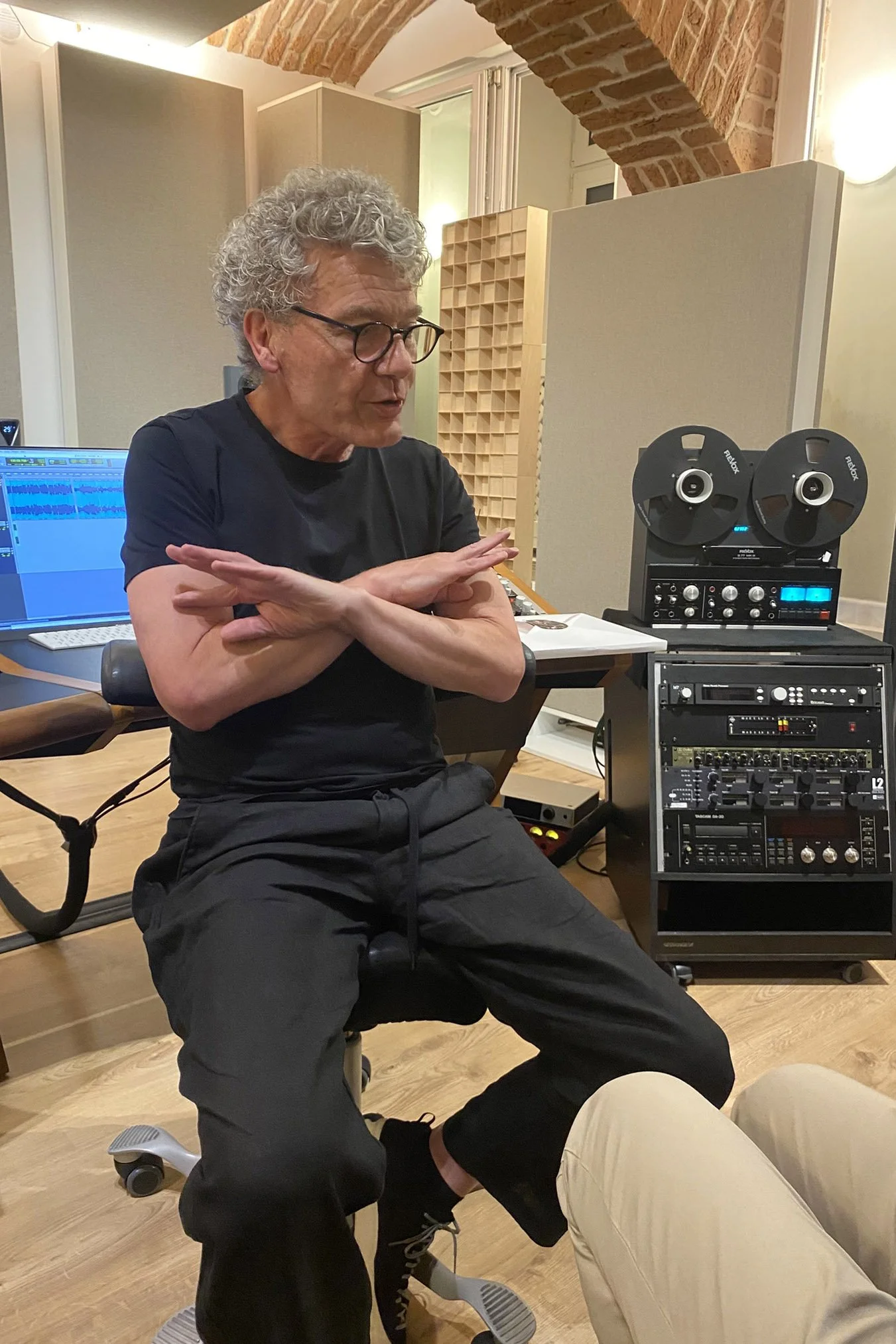
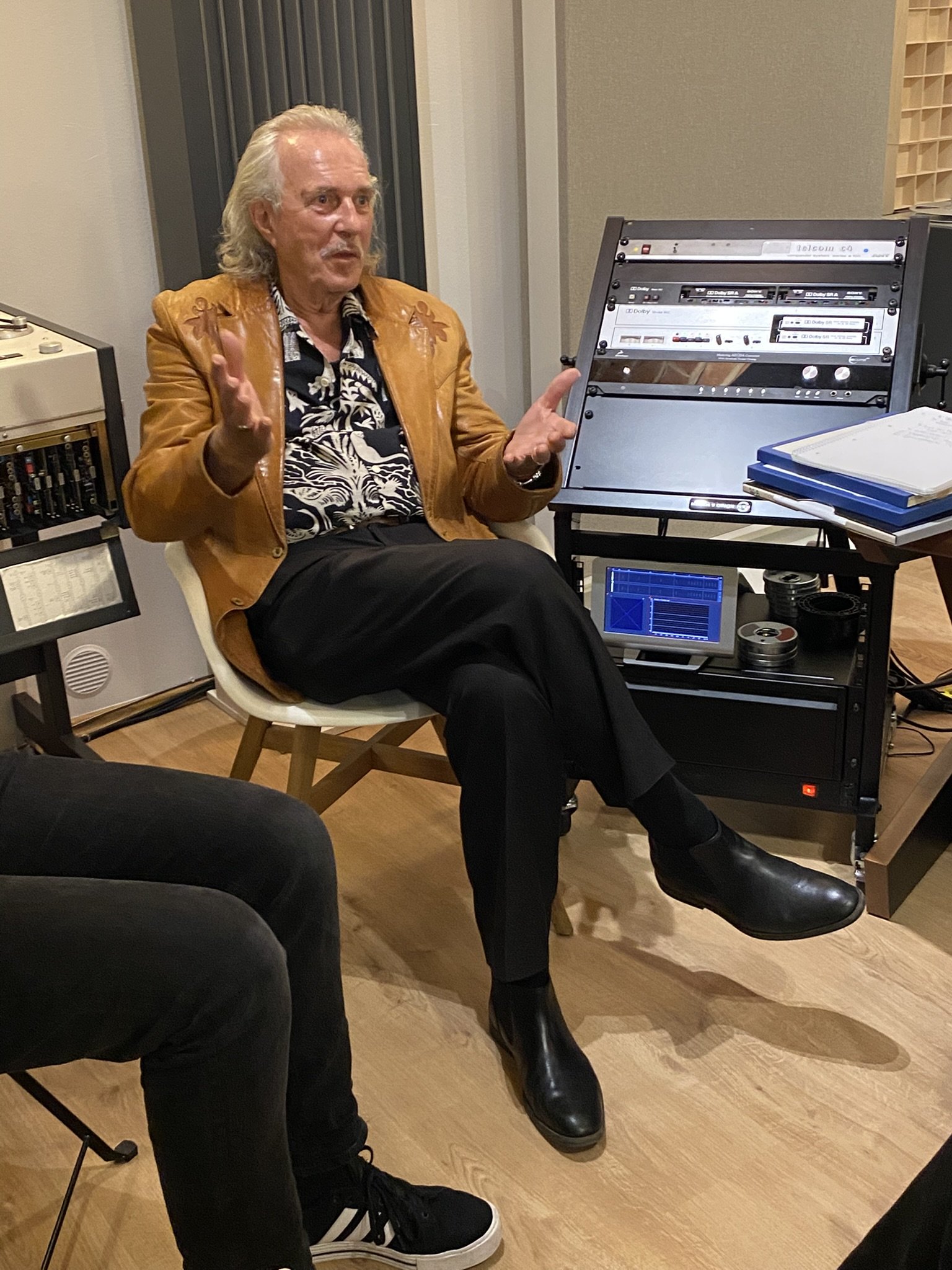
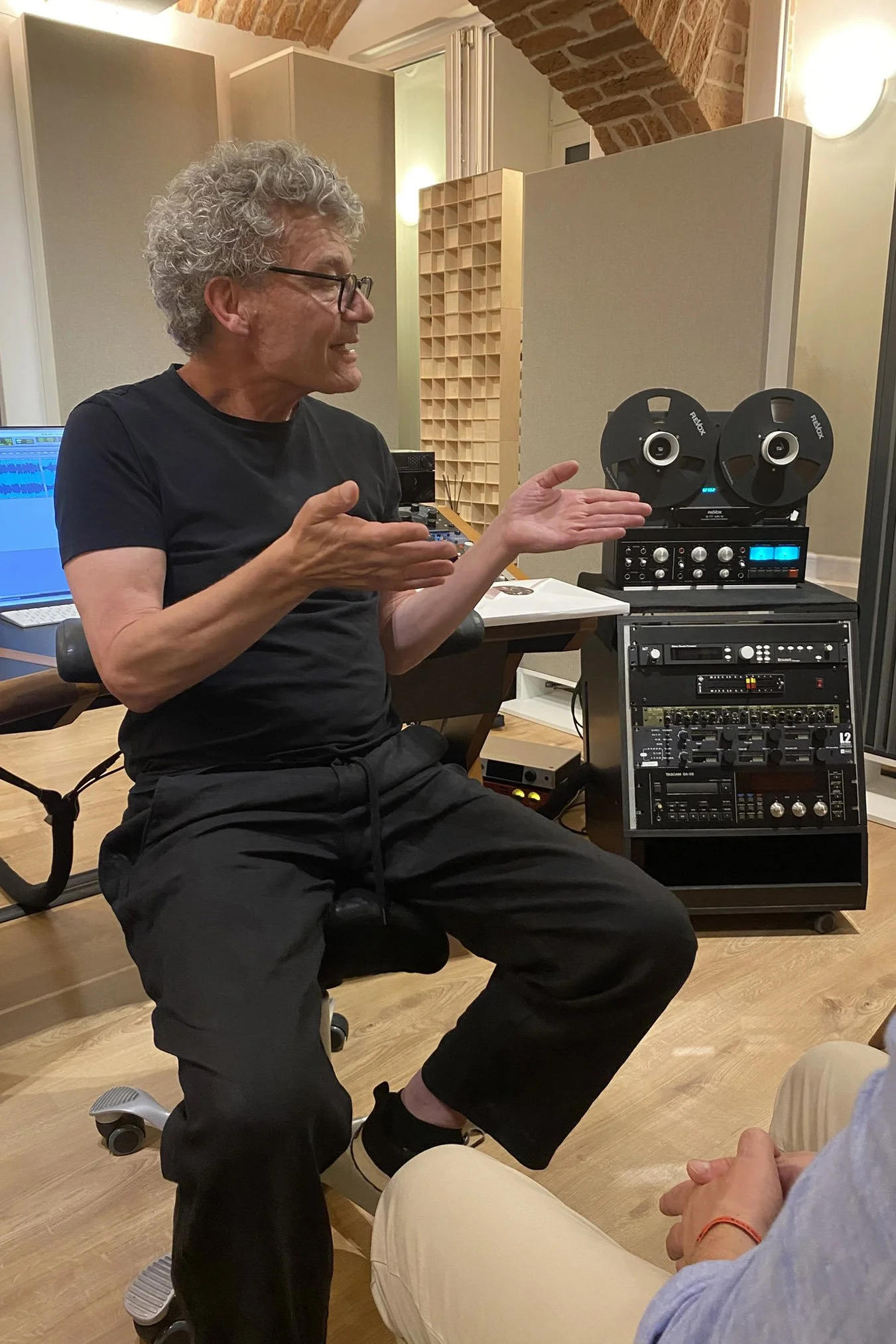
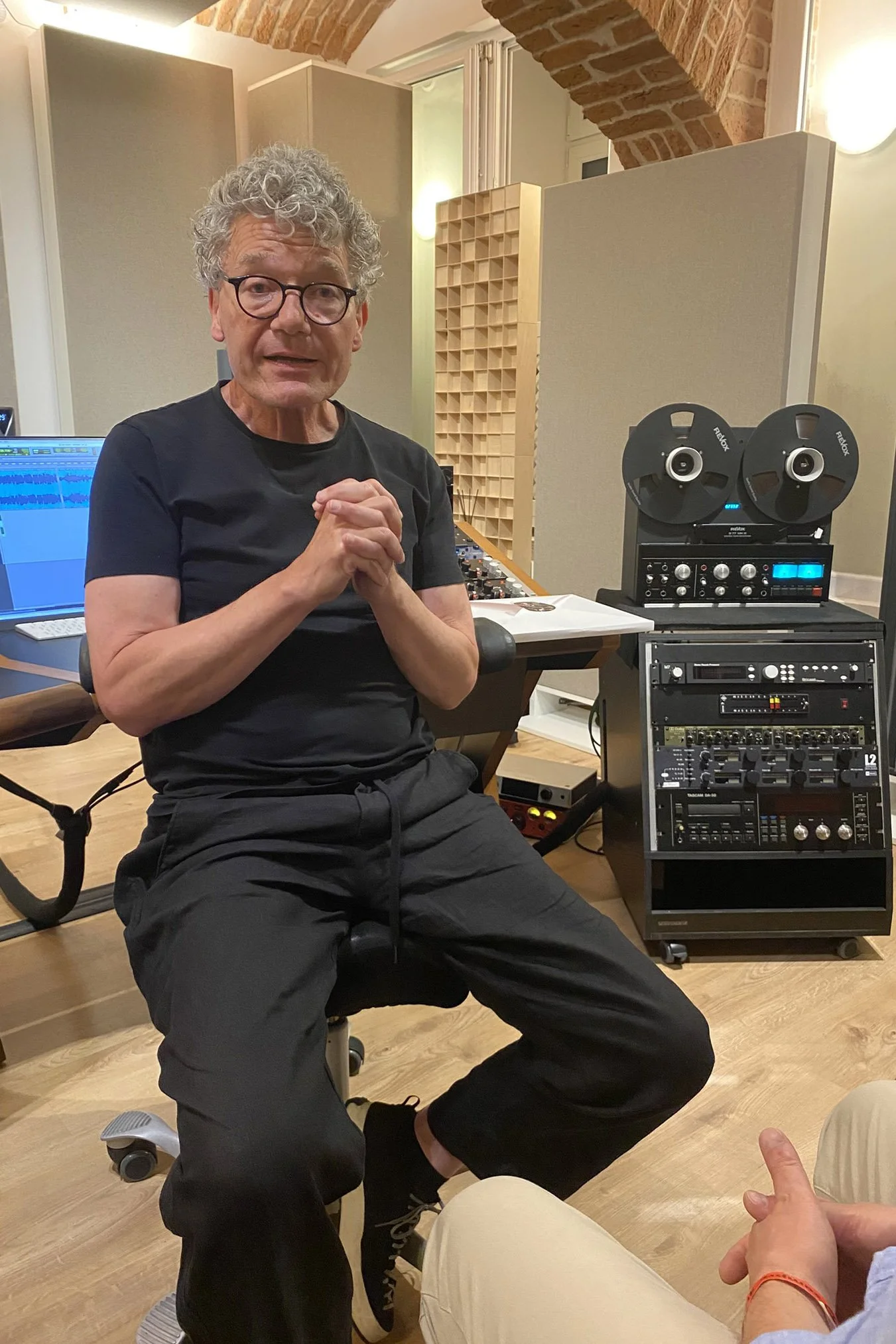
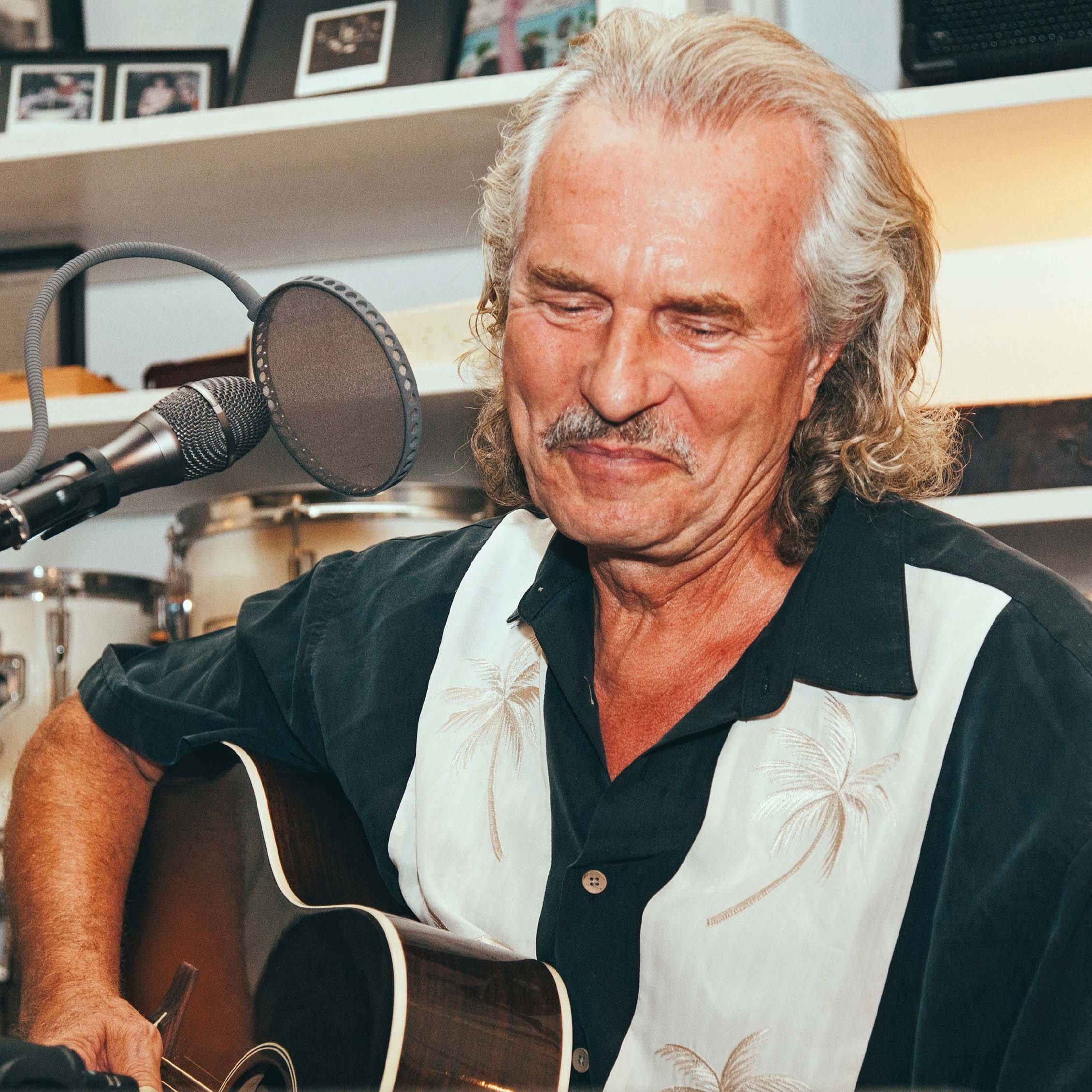
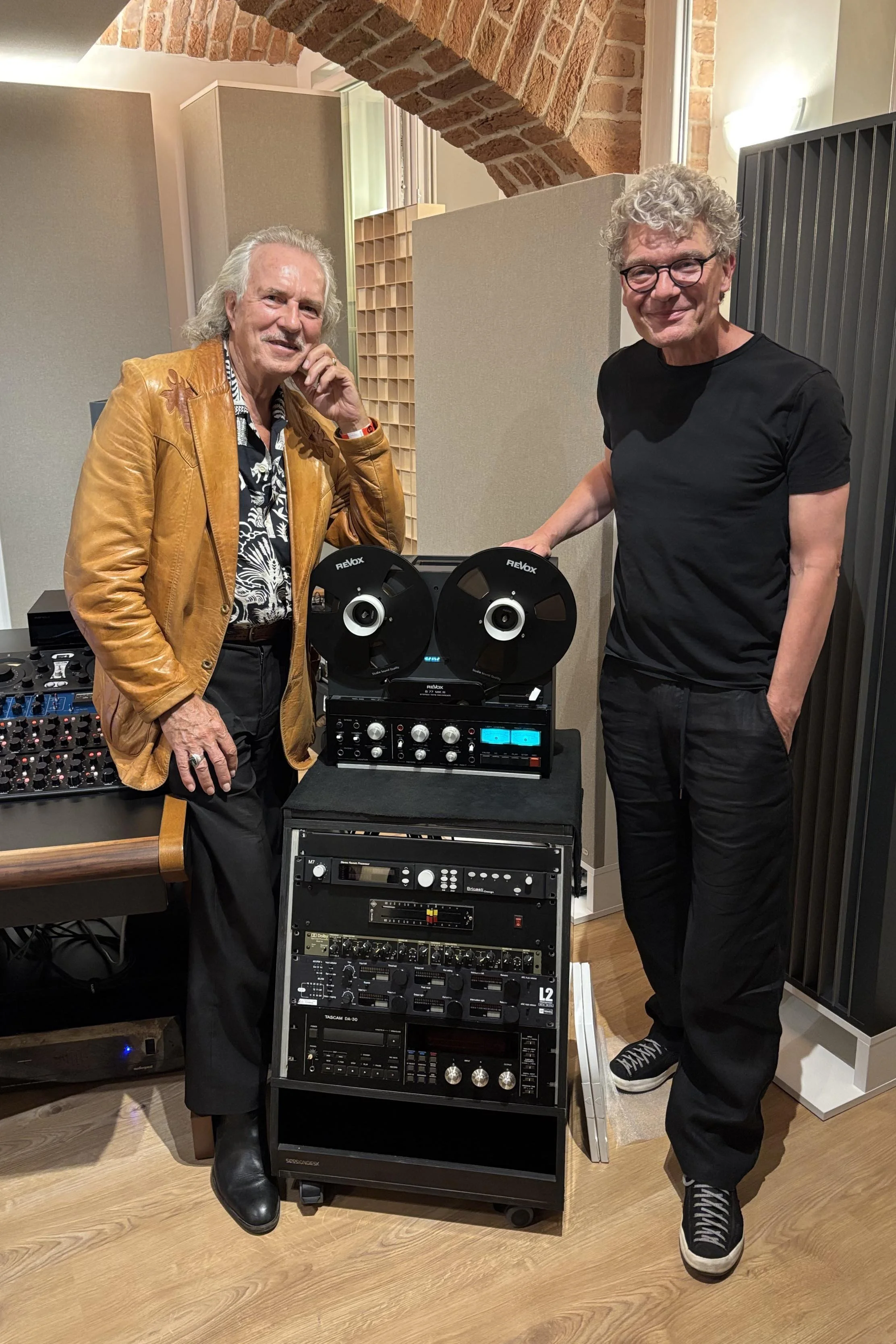
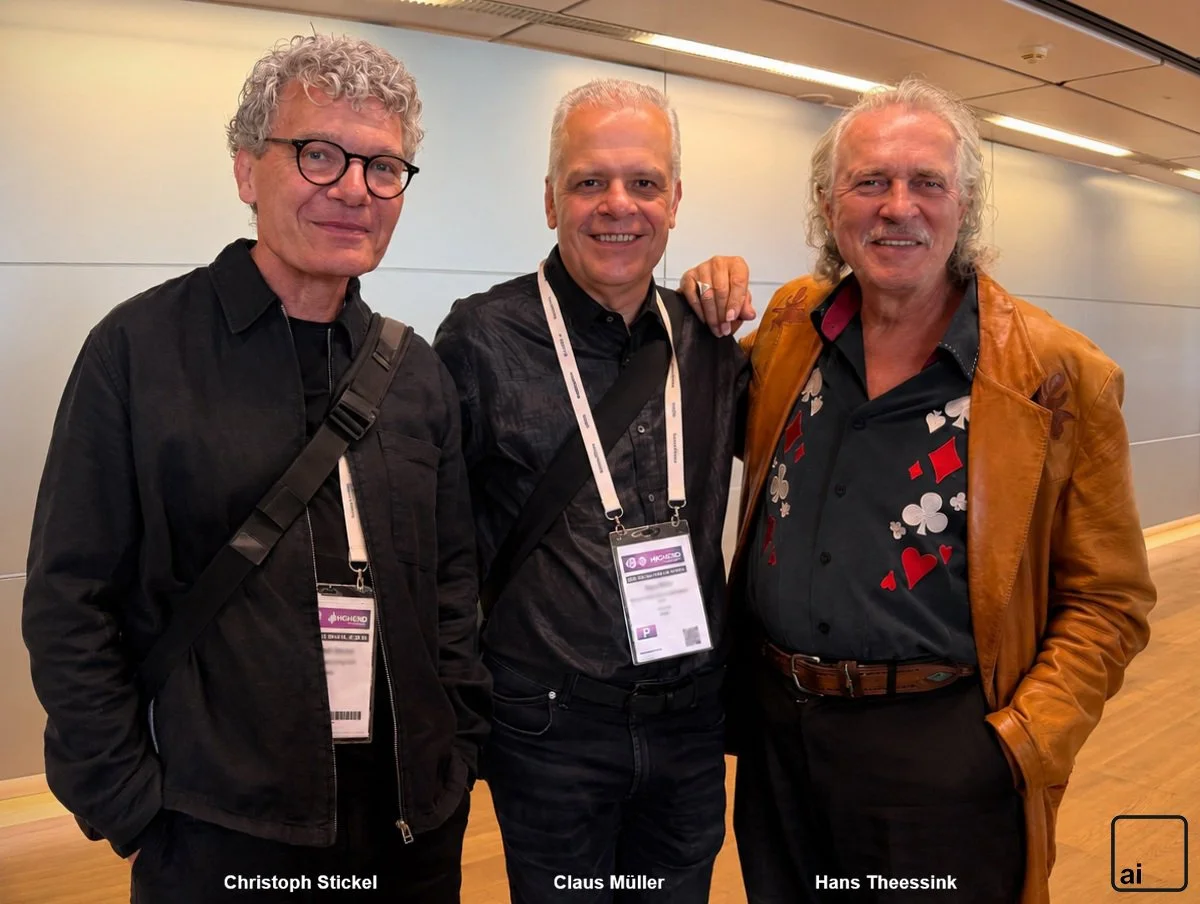
Hans Theessink and Christoph Stickel
A Studio Conversation
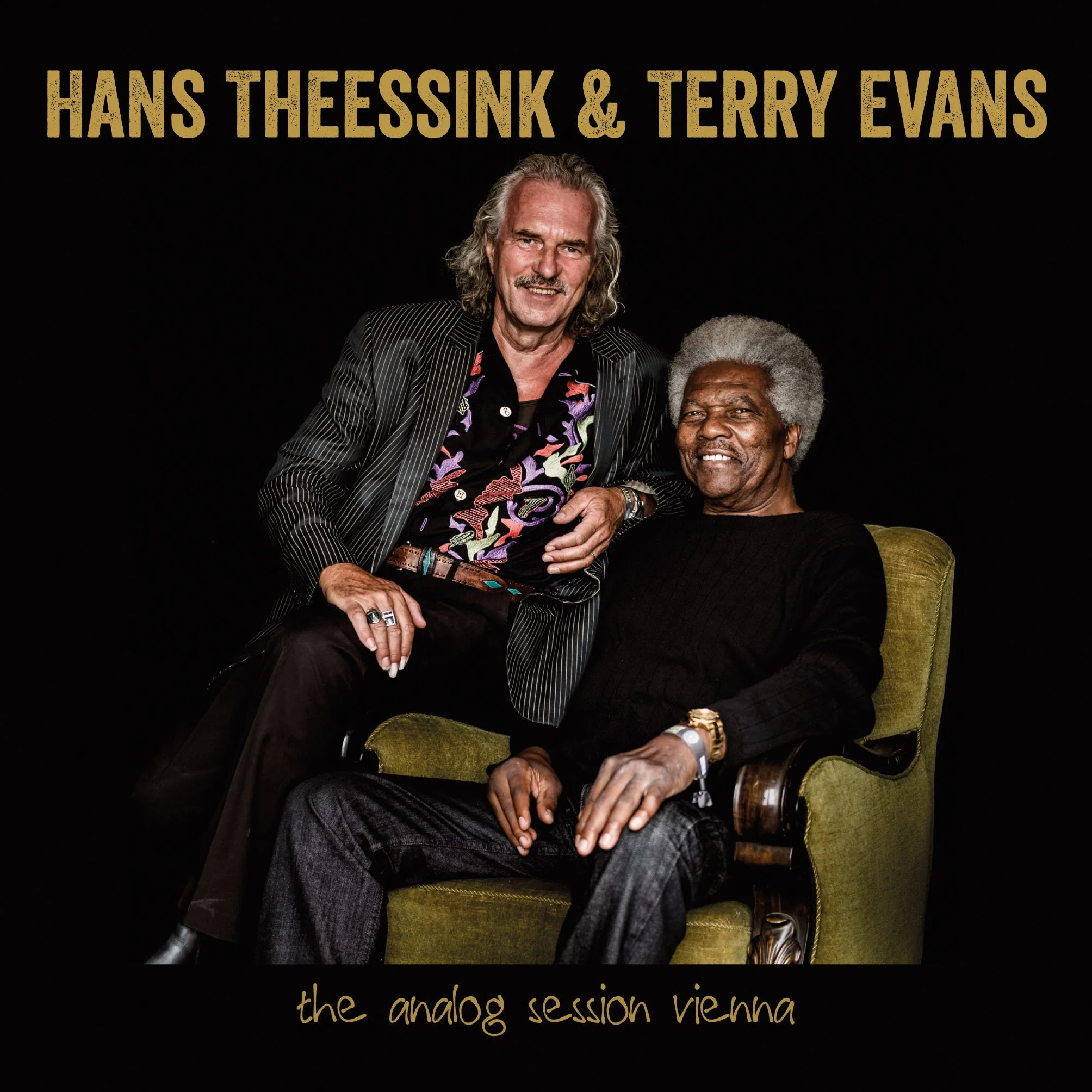
As part of HIGH END 2026, select guests, REVOX employees, and blues musician Hans Theessink were invited to Christoph Stickel’s mastering studio in Vienna. The basis for this studio discussion was the release of the album the analog session vienna, an analog live recording from September 7, 2017, at Supersense in Vienna featuring Hans Theessink and Terry Evans. The topics covered in this studio discussion include details about songs on the album, the recording situation, and information about the mastering process.
Author: Claus Müller
Studio visit: June 5, 2026
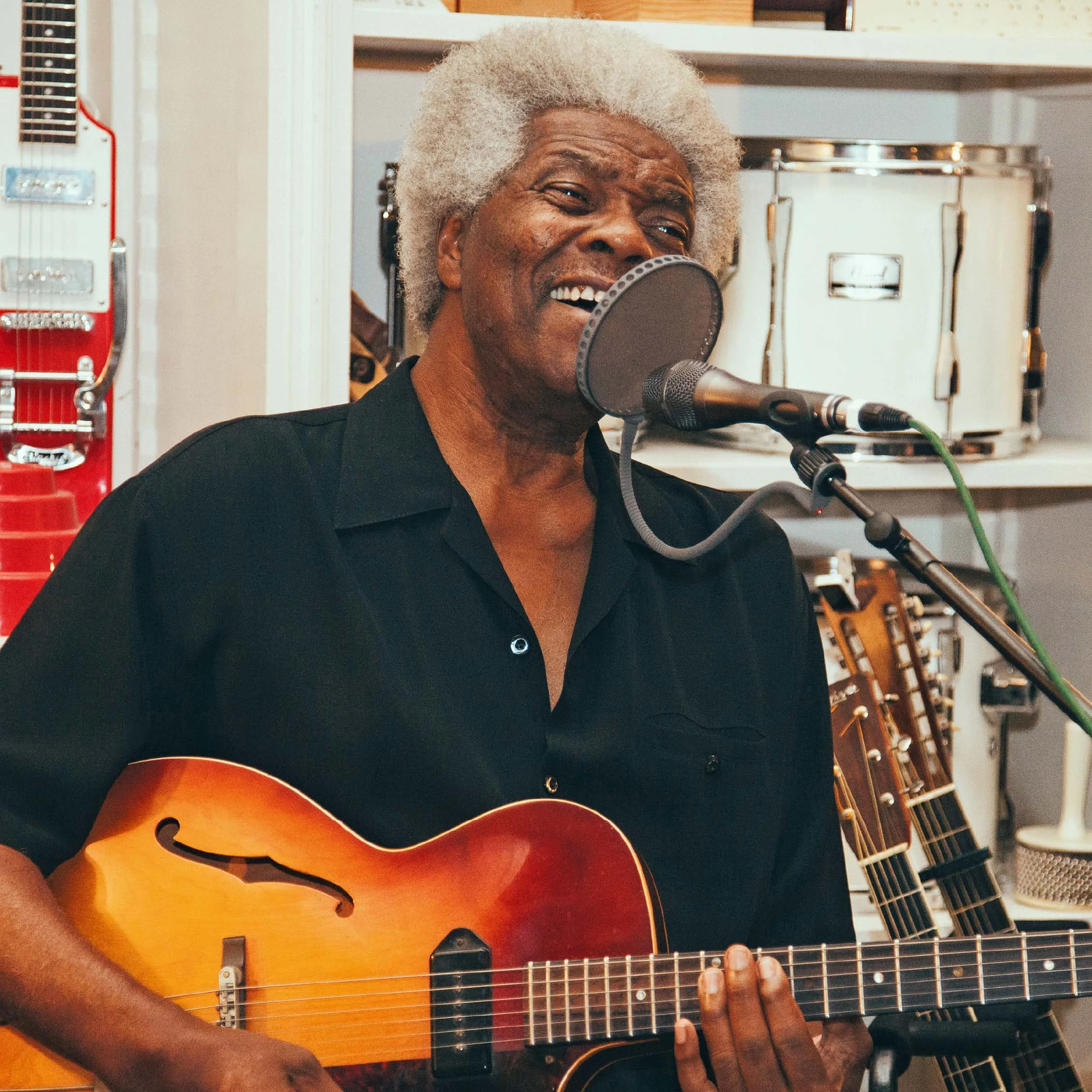
Christoph: Supersense is a coffeehouse in Vienna. The owners are dedicated to the analog lifestyle. They sell Polaroid cameras, develop their own analog film, and produce analog direct cuts for vinyl records. They use old presses for printing. A shop that’s all about analog madness. We got in touch after discussing the idea of a purely analog recording. The plan was to connect an analog Studer mixing console to a Studer A80 tape machine and record “direct to two-track.” It’s not a fully equipped studio. Everything was just set up haphazardly: a few microphones, a cable here, a cable there. The recording session took place with Dietz Tinhof, a sound engineer friend of mine. In my opinion, he’s one of the best mixing engineers in the pop scene in Austria - or even in the entire German-speaking world. For certain areas, he’s “the one and only.” He’s worked with Falco and similar artists. I asked him, “Dietz, we have this idea to make a few analog recordings at Supersense. Would you be up for it?” We agreed: this endeavor bordered on madness. You don’t do that anymore these days - it’s life-threatening… and then we were both standing there at Supersense, and off we went. I must admit, I was incredibly nervous. We sweated through four T-shirts during that recording. Hans Theessink kindly told us that you couldn’t tell we were nervous at all. So, the setup was complete, and before we knew it, Terry Evans and Hans Theessink came on stage. The audience was a selected group of about 60 people. They were all fans, all deeply immersed in the subject matter. They knew this was less of a concert and more of a recording session. The air was electric. The atmosphere was like that of a church service.
A professional audio tape has a running time of about 33 minutes. We decided that we needed a break after 20 minutes to change the tape. That meant, Hans, you had to cut your performance down to 20 minutes so we could have those segments. The audience, Dietz, and I were completely focused. And you musicians just seemed to be doing what you always do: making wonderful music.
The recording and mastering took place in 2017. It wasn’t until a few months ago, when it became clear that it was going to be released, that I listened to it again. I still find this music extraordinarily beautiful, intimate, unpolished, and above all, unedited. You hear exactly what happened on stage. How did you feel about it, Hans?
Hans: The same way. It was just the way it was. We couldn’t edit anything afterward. To this day, it’s simply what we did back then. You can hear that.
Christoph: You said you were on tour with Terry before the recording.
Hans: We were on a European tour and had been on the road for five weeks. Terry was already quite advanced in age back then. He was 80 and had trouble getting around. But his voice was heavenly, as always. He was a bit tired at that time, but I don’t think you can tell that from the recordings.
Christoph: What stuck in my memory: Terry came in and had a hard time moving. An old man. Not frail, just an elderly gentleman. It was hard for him to get up on stage. It wasn’t far - maybe a meter, with a few steps in between. Once he reached the top, he sank into that chair. And then, as if someone had flipped a switch, 40 years seemed to vanish. There was a young, motivated musician performing. His voice was as crystal-clear as a young man’s. Music was like a fountain of youth for him. No sooner had the concert ended than he walked off the stage, hunched over again.
Hans: I was already familiar with that. It was like that at every concert. As soon as the first note rang out, you couldn’t tell anything was wrong with him.
Christoph: I’d say let’s listen to two tracks. Hans and I edited the music a little, but we didn’t add anything - we just adjusted a few frequencies and volume levels. Basically, what we hear is exactly what happened at the club. I’ll hit play.
Songs: Blues Stay Away From Me | Gotta Keep Moving
Christoph: When the guitar got louder, my heart raced two or three times. You can hear the faint clatter of a windowpane in the recording room. In digital production, the very first thing you’d do is use a computer to remove that. That’s what sound engineers are trained to do. With this recording, though, I must tell myself: No, that’s not a problem. It’s supposed to be that way. It’s an analog live recording.
Hans, is this concert based on a setlist you played on tour, or did you change it for this recording?
Hans: We didn’t play on a tour setlist. We put together segments that fit the time frame: three to four songs each, totaling about 20 minutes.
Christoph: How do you put that together? When you’re putting together an evening like this, how do you approach it mentally? How do you engage the audience?
Hans: It depends a bit. When I play solo, I just follow the flow and react to the audience. Whatever feels right at that moment becomes the next song. When we played as a duo, it was the same - we understood each other. I’d start a piece, and Terry would join in. When you play with a band - that is, with a lot of musicians - then of course you must put together a setlist.
Christoph: Are there hits that people always want to hear, or does that change over time?
Hans: It changes constantly. I have certain songs up my sleeve that I can pull out. Then it works.
Christoph: So, it doesn’t depend on what you’ve just released.
Hans: If it’s a new album, I mainly play songs from it. Because then you can sell it during the intermission, too. But otherwise, it happens intuitively, like a flow of emotions.
Christoph: Speaking of small settings: Do you also base it on how many people are in the audience?
Hans: When you’re playing for 5,000 people, you need bigger movements. You can’t play too quietly - there must be more to it than just delicate sounds. But I find this intimacy here to be something very special. It was like being in a living room. I’m often in this situation—at more intimate concerts. Then I can play very softly, and people are still fully engaged.
Christoph: And they’re as quiet as a mouse, listening to you. Is there something you prefer? The big venues or the intimate ones? Or would you say both are part of life?
Hans: I love the intimate setting - it suits me perfectly. But I can handle larger audiences, too.
Christoph: Let’s listen to a little more.
Song: Where The Southern Crosses The Dog
Christoph: We ran into a technical challenge with this song. Everything had to be 100 percent analog. Nothing could be changed afterward. We had an analog gold-foil reverb unit with us. We wanted to add some spatial depth to the recording - a bit of reverb. But the gold-foil reverb didn’t sound right for this recording. During the soundcheck, we had to decide and muted the reverb unit. We had two additional microphones standing behind the mixing console and pointed toward the stage. Since the audience was very well-behaved, we were able to make use of the café’s acoustics. That’s why you hear a slight trail of reverb: it’s the room itself - the café. When the audience applauds, you can clearly hear just how large the room is, and you hear the clinking of coffee cups. That’s part of this intimacy. There’s nothing between the recording and the musicians. There’s this beautiful saying in sound engineering: “When the need is greatest, the reverb is closest.” If something isn’t working, you just add a little more room. That always makes the signal sound a bit nicer. You’re very clean tonally - everything’s just right. That’s fascinating. When I think about what goes on with vocal editing in modern productions - all the tweaking that’s done… But, as proven here, there’s another way to do it, and that’s very touching.
Hans: Ah, so there was nothing to tweak there.
Christoph: No, there was nothing to tweak. The parts that were a little “out of tune” had their place. In two places, you go a little higher in pitch and Terry a little lower. That creates a sense of tension. Do you think about that while you’re playing?
Hans: No, it just happens when we play together.
Christoph: While something like that is happening… if you listen analytically… then it’s no longer a fifth, but something in between. That creates an emotional element. I’d say let’s play another song.
Song: Build Myself A Home
Christoph: How many guitars do you bring with you when you're on tour?
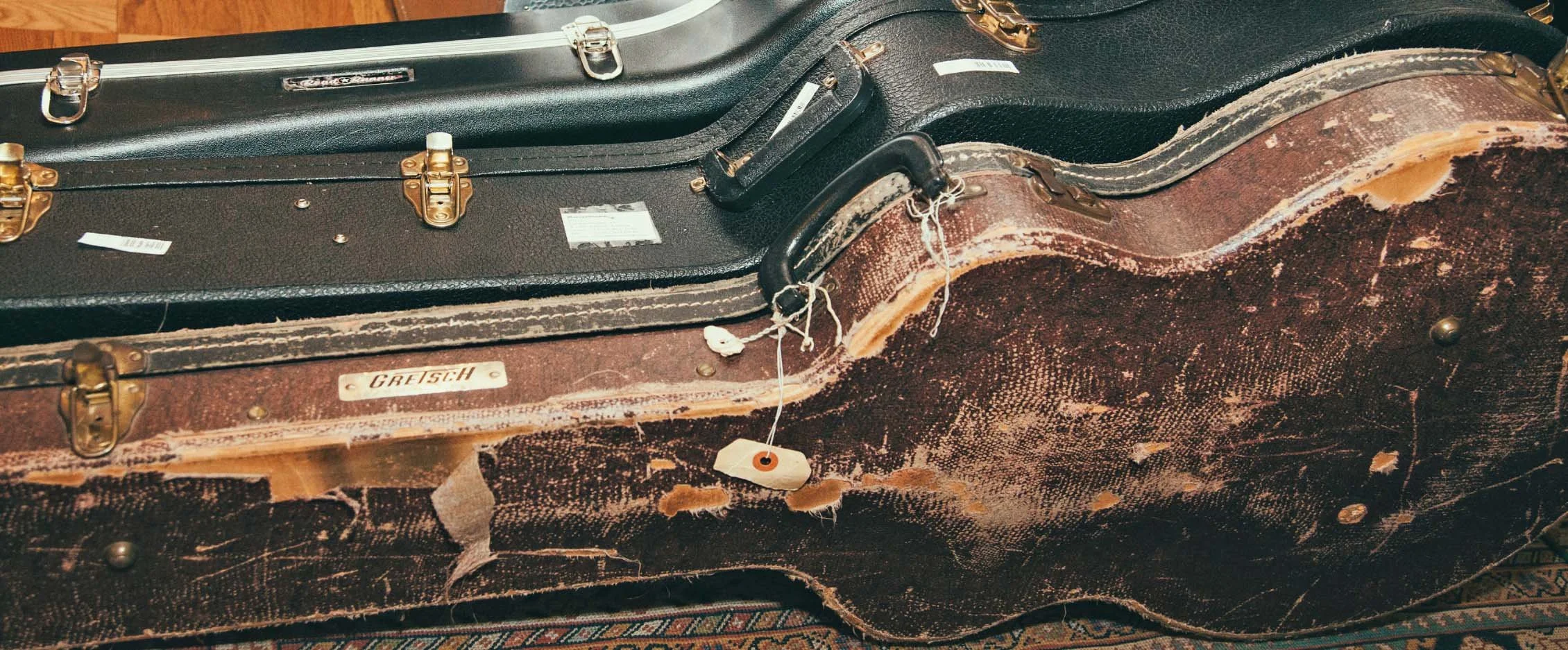
Hans: I usually take four guitars with me: a six-string in standard tuning, a six-string tuned to D, a twelve-string tuned to C, and a National Dobro guitar tuned to G.
Christoph: You always have those with you on stage, too.
Hans: Exactly, so I have them all at hand and don’t have to retune between songs.
Christoph: Are those always the same guitars, or do you switch them up?
Hans: They’re usually the same guitars - the ones that work well for live performances. I also have some excellent guitars that aren’t well suited for live events.
Christoph: So that means when you’re in the studio, you use different instruments.
Hans: Because they have a sound that offers something special. For live performances, you need guitars that are reliable and always work.
Christoph: How many days before a show do you string your guitar so you can keep it in tune?
Hans: Usually an hour before the show.
Christoph: Really? I wouldn’t have dared to do that back when I was a guitarist.
Hans: I must press them down a bit until they’re just right.
Christoph: So, you’re really on stage with fresh strings, okay.
Hans: I don’t change them often. Changing strings isn’t much fun.
Christoph: You don’t have a roadie to help you out?
Hans: No, I do it myself.
Christoph: Then I’d say let’s listen to at least one more song.
Song: Vicksburg Is My Home
Christoph: That’s one of the reasons we were talking about a church service earlier. You’re right in the middle of it, and the atmosphere is just incredible. You said Terry was 80.
Hans: He was back then, yes.
Claus: You’d already composed this song before you met Terry. Was that a happy coincidence?
Hans: We met in 1992 at a festival in Winnipeg, Canada. Terry said he was from Vicksburg, Mississippi. Strangely enough, I’d already written this song six or seven years earlier. At our concerts, he was always the one who sang this song - it just felt right. It was pure coincidence that I already had the song.
Christoph: Had you already included it in your set list before that?
Hans: Yes, I always had this song in my repertoire. One of the last concerts we played together was at Supersense. Terry passed away on January 20, 2018. I still miss him. When I drove him to the airport, Terry said we’d see each other at my 70th birthday bash - those are the birthday concerts I host at the Metropol in Vienna. It wasn’t meant to be that way. I then played the song “Vicksburg Is My Home” once more with my Danish colleague Knud Møller - a wonderful guitarist - and with harmonica player Gait Klein Kromhof from the Netherlands, in honor of Terry. It’s also on the 70th Birthday Bash album. I play that song repeatedly to commemorate Terry.
Christoph: When did you record your debut album?
Hans: My first record was an EP in 1970.
Christoph: Where did you record it?
Hans: In a backyard in Münster (Germany).
Christoph: How did you end up in Münster to make a blues record?
Hans: As a Dutchman, I was born right on the German border, in Enschede. I had a German impresario early on. Before I even had my driver’s license, he’d pick me up and take me to clubs in Westphalia. So, I had connections in that scene from an early age.
Christoph: So that means you’d already played a lot before you went into the studio.
Hans: Yeah, that’s exactly right. There were festivals in Osnabrück where I played a lot. There was a sound engineer there who kept recording stuff. He said, “Come on, let’s go into the studio and see what happens.”
Christoph: Does that recording still exist?
Hans: It does. An album with six or seven tracks, I think.
Christoph: A lot has happened since 1970. I know a lot about your albums, but going that far back? When would you say your first album - the one that’s important to you - was made?
Hans: It’s the first record that was also released in the U.S.: “Baby Wants To Boogie.” That was in 1989. I recorded it here in Vienna at Alex Munkas’ Tonart Studio. Those are analog recordings, too.
Christoph: Exactly, I was already working on those. I know them well. Great record. But it took a certain journey before you could say: Now I’ve gotten to the point where I can present myself with an album I can stand behind.
Hans: I’d already made an album before that, “Titanic,” for example, recorded in 1982 in Denmark. It was a studio with a 24-track machine. They had little money and only a single tape, which was reused repeatedly. We’d recorded some stuff, I’d come back for the next session, and half of it was gone. I also recorded an album in 1976. It was produced at Puk Studio in Denmark. That was a great studio - Elton John and all sorts of big names were recorded there back then. It was mixed in Norway. That company went bankrupt. All that material is gone now.
Christoph: Do you still have any of that in your archives?
Hans: Unfortunately, I don’t have the audio tapes anymore, but I do have the record. That’s what happens when a pressing plant burns down, like with Pallas in northern Germany. We used to have everything pressed at Pallas. And then there was that fire. Unfortunately, a lot of it was lost.
Christoph: I have a question for the listeners. When you listen to this recording, there’s this raw, unvarnished quality to it. For example, you can hear the microphone diaphragm pop briefly when the volume is too high. You can hear the windowpanes in the café rattle a bit. Is that something that’s distracting, or do you think it enhances the atmosphere? I mean, purely as listeners who are just sitting here listening to a record.
Claus: For me, there’s a significant difference between studio and live recordings. When I’m at a live concert and there are small mistakes, it doesn’t bother me at all. I’d think it was a shame if those little things were edited out. That’s why it doesn’t bother me in recordings like this either. Digitally, you could remove all of that. Certain things are just part of life. For me, music recorded analog and live doesn’t need to be smoothed out at all.
Christoph: Exactly, that’s why I’m asking: With any other production, I’d have to re-edit something like this - all those elements would have to be removed, and it would have to sound clinical. You can hear quite a bit of background noise in this Supersense recording. The noise is surprisingly low; in the quiet passages, it’s kept to a minimum. Sometimes the panning in this recording is rather narrow because you’re so close to the musicians. Your guitar, Hans, or Terry’s, too. He’s shifted slightly to the left a few times - there isn’t much room to work with. A lot of it comes more from the center. Otherwise, the signal would be too far over on the right speaker. That would then match the character of the 1960s, like with Coltrane, for example, which would be a bit unpleasant on headphones. I’m relieved - then we can leave it that way.
Volker: Christoph, that’s exactly what we love about this tape—that it’s an exact reflection of what we experienced there. Anything else would be crap.
Christoph: My reality is often different. Would you like to see my current email thread? For example, someone wrote: “Christoph, great, but I noticed a few things here and there. That slight smacking sound - can you please turn that down a bit? And maybe that one note, the F - can we make this or that a little louder?”
Volker: But I don’t want that kind of reality.
Christoph: That’s why I’m asking this group how they perceive reality.
Hans: I think it’s wonderful that you didn’t polish up this recording.
Volker: In my world, it’s the best recording we’ve had in the last 15 years. If you look at this genre, who else do we have? I don’t know anyone else. We were at the AXPONA trade show in Chicago. Whenever this track came on - “Vicksburg, Lake Michigan” - people would sit up straight. We had three days and brought mountains of tapes we wanted to play. But for three days straight, we played only this tape. The visitors didn’t want to hear anything else but that. Because it’s just so live. We thought people were about to burst into tears…
Christoph: That’s the thing about this “worship service.” There’s something very special in the room. And when you know that Terry died soon after and that this album is his legacy to us, it’s even more moving. I think it’s great. It’s the pure truth that you, as musicians and artists, pass on to us. I’m all the happier when the audience doesn’t want it any other way.
Claus: One more question about preparing for this recording situation. Do you do a rehearsal at the beginning to make sure the volumes are right? It’s often the case that musicians play a bit louder or stand closer to the microphone during a concert. How do you handle that as a sound engineer? Do you turn the fader down a little during the recording and then back up again, or do you just let it run as is?
Christoph: I’ll share my opinion right away. How do you see it, Hans?
Hans: I’d just let it run as is. But I don’t know what you guys did.
Christoph: In studio productions, a lot is controlled because they don’t have that living room feel. Limiters are engaged there to automatically smooth out the louder passages. With an analog recording like this, you don’t stand a chance. During prep, I ask everyone to play very loudly, fortissimo. From that point, I still need 3 to 6 dB of headroom.
Hans: Exactly, you said, “Play the loudest you’re going to play. It’s going to get a little louder.”
Volker: It’s important that you have the best tape machine and the best tape available on this planet. That you have enough headroom. You can push an SM900 tape machine to the absolute limit. You need that because it’s the only safety net for a recording like this. And two people with four hands who’ve just changed their T-shirts. The combination of all that.
Christoph: With these musicians, we’re talking about full-fledged professionals who operate in a league that’s completely predictable. If you sing loudly and with full passion, that’s something you can reproduce. It’s not like a high school band, where the guitarist secretly turns it up a bit louder without the others noticing.
Hans: But when I sing softly, I’d be right up against the mic, and when it gets louder, I step back.
Christoph: That’s what the pros do. You’re working the mic. You’re moving - you can see that when you play. At times, you even step to the side of the mic. Then the sound gets a little duller, but it gains more body. You know what happens.
Hans: I can work with that, yeah.
Christoph: We were nervous, but strictly speaking, we had no reason to be. You musicians made it easy for us. When you get to work with people like this, all you have to do is make sure the lights don’t go out. The music happens on stage; the magic happens up there. We must make sure we capture the music in our photos. I’d say let’s listen to one more song, and then I’ll talk about the mastering.
Song: At The Dark End Of The Street
Christoph: All I can say is: Thank you so much for this wonderful music. It’s simply moving. I know the music well, but it happens every single time I hear it. Beautiful. It brings me so much joy.
Hans: It sounds excellent. That was the last thing Terry and I played together. I really love that song, too.
Christoph: Because of the song itself, or because of how you played it in that moment?
Hans: Both. Terry had played a lot with Ry Cooder and sung this song with him time and again. But Terry really wanted me to sing it. At first, I didn’t want to, because I know how well he always sang that song. But he said, “No, you have to sing it.” And that’s how it went.
Volker: That was the song I absolutely wanted at the concert. I said, “You can play whatever you want, sing whatever you want, but this song has to be included.”
Christoph: We’ve found ourselves in a very deep state where it gets intimate. That’s a lot of fun.
Milica: Thank you very much to you too, Christoph.
Christoph: Thanks, that’s very thoughtful of you.
Hans: You did an outstanding job. I have no idea what you did during the mastering process.
Christoph: REVOX asked me to explain what happens here in this studio, aside from me pressing “Play” to play music. I’ve been mastering full-time since 1991 and was very fortunate to get my start at a major studio. It was one of the first studios in Germany to focus exclusively on mastering. In the U.S. and the U.K., this approach - creatively shaping the sound during mastering - already existed. It was the idea of a German engineer working at BMG to bring that practice to Germany as well. I was there and witnessed the exact moment when vinyl was replaced by the CD - the transition from the analog to the digital world. For many years, I worked with analog tapes and received master tapes every day that were destined to become a CD, a record, a music cassette, or what felt like 1,000 other formats, until a few of them had become established. So, I was very fortunate to work extensively with audio tapes. This led to the opportunity to acquire one of the first restoration systems. That was the NoNOISE software from Sonic Solutions. I think it cost 100,000 DM back then. At the time, there were only two such systems in Germany. We received large recordings that were terribly noisy. We were among the first to be able to reduce that noise. Among other things, I had the privilege of working for the Comedian Harmonists. We took some bold steps.
I continued to work with audio tapes. Not necessarily in the context of the recording situation, as with the concert mentioned above, but rather with playback and post-production - areas heavily influenced by digital technology. I was very fortunate to be able to work extensively on the recordings of the conductor Celibidache from Munich, who left behind a vast musical legacy, some of which had been recorded analog. More archivists began approaching me. So, in addition to my regular mastering work for pop, rock, and jazz productions, I kept receiving audio tapes. That amounted to one or two productions a month. In the 2010s, the volume dropped, and the machines slowly began to gather dust. But that was about to change abruptly. I received a request from Edel - the company that owns the MPS archive: the six Oscar Peterson recordings titled “Exclusively For My Friends” were to be reissued. From that moment on, I dove back deep into the world of analog tape to figure out just how much I could get out of it. The question was, who still buys analog? The idea of reissues on vinyl was practically dead. We put a lot of energy into the Oscar Peterson project. Everything was to be done entirely on an analog level. There were some mistakes early on, but we were able to fix them all. When the album was released, it was decided to also produce master tape copies. The request came from a small company in Burgenland, Austria (Horch House). As a result, I was inundated with original tapes from historical archives. I got to experience some exciting phone calls: “Christoph, I have the master tapes here for Horch House. They’re the original Star Trek tapes.” I remember it clearly - I was on Berlin’s Ku’damm at the time, giving a lecture. It was a heart-stopping moment. I replied, “Okay, by when does the work need to be done?” The answer: “You’ll get the tapes next week; we need them as soon as possible.” These were the analog master tapes of Star Trek, Parts 1 and 2, the complete sets. I gave it my all to ensure the result was excellent. Since then, my work with master tapes has deepened significantly.
There’s a term you can look up in reference books: Mastering is the final artistic and sonic step and the first step in the replication process. That’s pretty accurate. When I consider my working hours or the effort involved, the artistic, creative, and sonic work accounts for about 80%. The remaining 20% is the effort required to generate the files needed for duplication and further processing. That 20% gets expensive if you make mistakes - for example, if a track is incorrect, something is missing, or the mastering isn’t right. By 2026, 98% of my work will be listened to on streaming platforms. I do still produce vinyl and CD masters, though. But streaming platforms have become the dominant medium through which practically everything is listened to. There are clear guidelines on how digital music files should be. They’re ignored. This applies primarily to volume. The idea is: the louder, the better; the more striking, the better. I must admit that I’ve been stepping away from that for several years now because I can’t stand it anymore. I’m also not as good at handling the volume as others are. I really enjoy being able to do things differently - to focus on the music itself rather than mastering it to be “garish” and “flashy.” I find it beautiful when music has dynamics. That’s why I spend a lot of time with jazz, classical, blues, and everything that can be described as art in this sense. This music is handmade, resonates on its own, and works within the environment.
Participants in the studio conversation:
Hans Theessink: Blues singer and guitarist
Christoph Stickel: Mastering engineer and sound engineer
Volker Lange: Member of the Executive Board, Revox Group
Milica Theessink: Management, Hans Theessink
Claus Müller: CEO, audiotapereview.com