AM Belgium
An interview with Peter Van Rompay
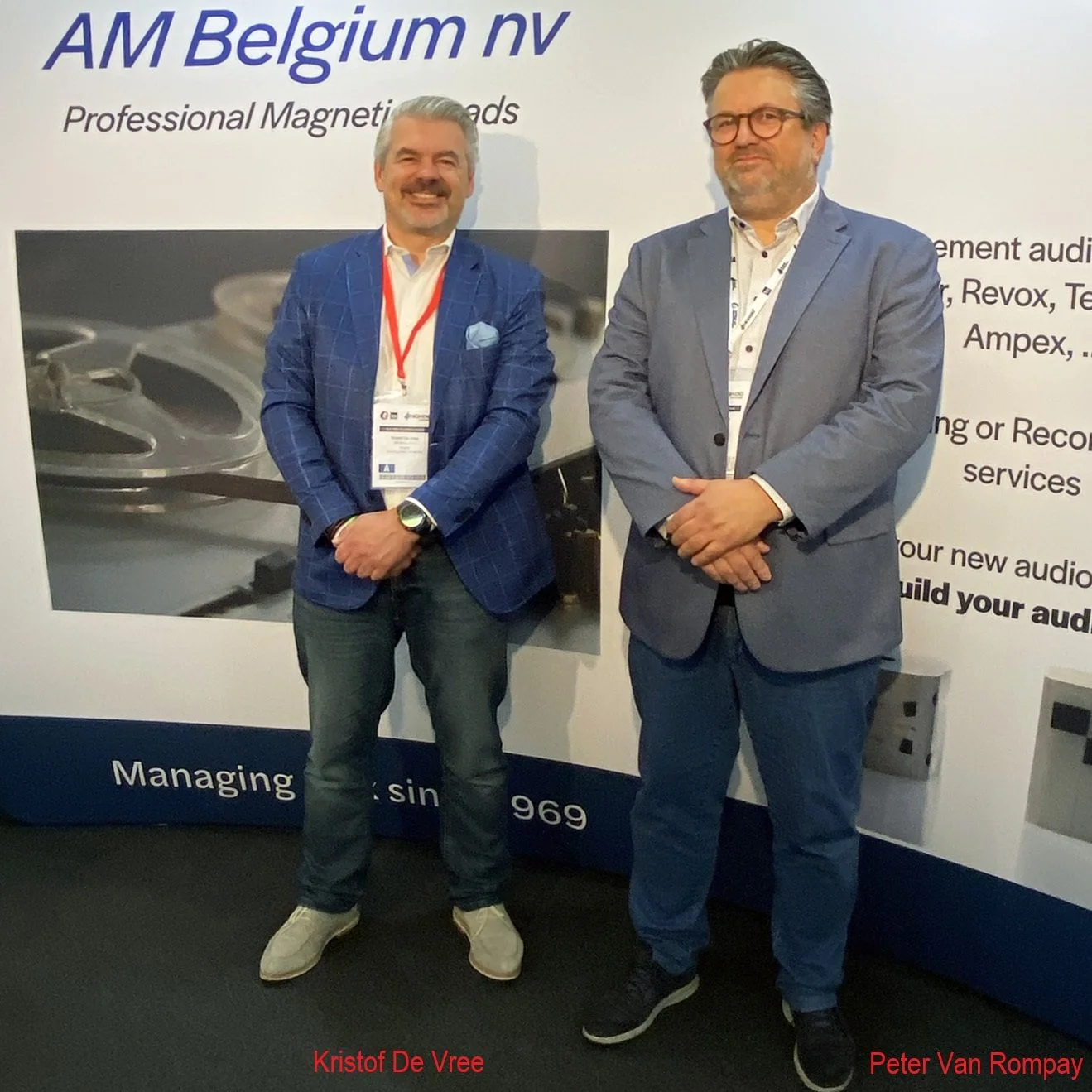
AM Belgium has been an independent company owned by the De Vree family since 1990. It emerged from Applied Magnetics Cooperation, which was founded in California in 1950 and is currently managed by Kristof De Vree, the son of AM Belgium founder Jean De Vree. The company is based in Belgium, with an industrial manufacturing facility in Romania and is considered a top player in magnetic heads. Its products are developed in close cooperation with customers according to their specifications. At HIGH END 2025, I met Kristof De Vree (left in the picture) and Peter Van Rompay (right in the picture), with whom I conducted the following interview.
Claus: I am very reassured that AM Belgium still manufactures one of the most important parts of tape machines, the tape heads. What is the history of the company?
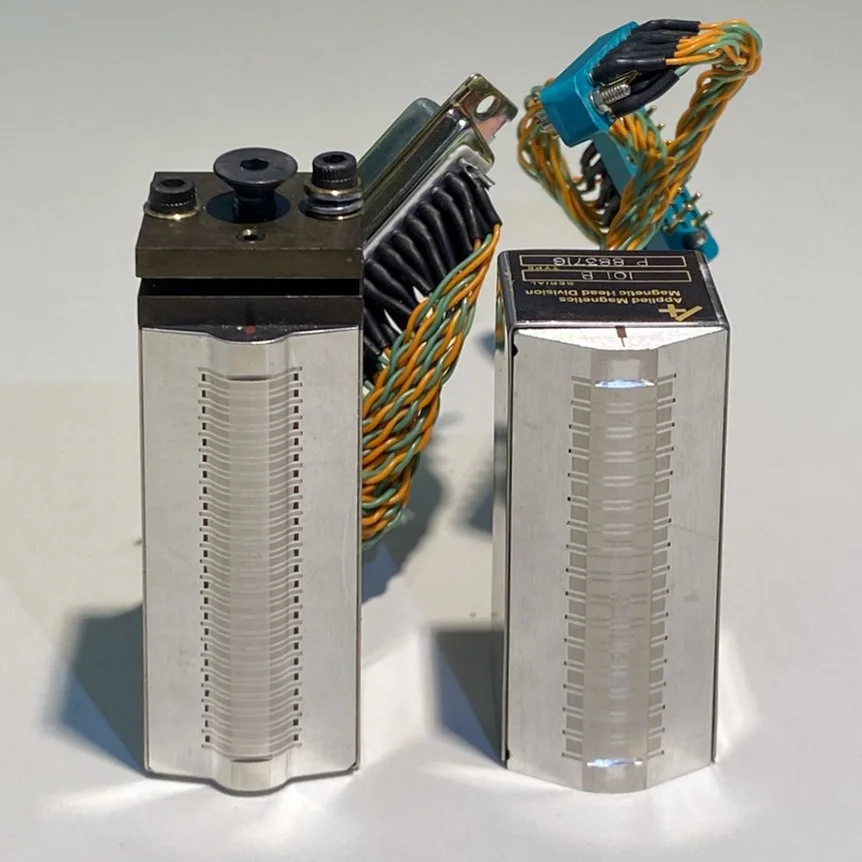
Peter: Thank you very much for inviting me to this interview, Claus. I am very grateful to have the opportunity to tell the story of AM Belgium. The initial company started in 1950 in California, USA, as Applied Magnetics Cooperation, manufacturing tape heads for a variety of applications. One application was to build tape streamers for the computer industry, which required an extra production facility. At the end of the 1960s, they set their sights on northern Belgium. They chose a region near the Dutch border, where there were enough employees, skilled for the specialized manufacturing. Philips was nearby, so it was easy to find enough electronics engineers. Subsequently, further applications for magnetic products were found. These were magnetic heads for quarter inch and half inch, for single-track, two-track, and multitrack audio applications, etc. Later, applications for public transport ticket readers were added. These were magnetic heads used in bus/metro/train ticket machines or parking ticket vending machines. Also, magnetic heads for ticket readers in tollgates were created. At the end of the 1980s, the story of the 9-track tape streamers ended. Applied Magnetics Cooperation sold the company to Jean De Vree, the chief engineer at Applied Magnetics Belgium. He took the company in a different direction, as there was demand for magnetic sensors for banknote verification. Today, we are building sensors for the gaming/vending industry, financial institutions and even national banks that need magnetic authentication equipment for banknotes.
Claus: How important are the products for the audio sector?
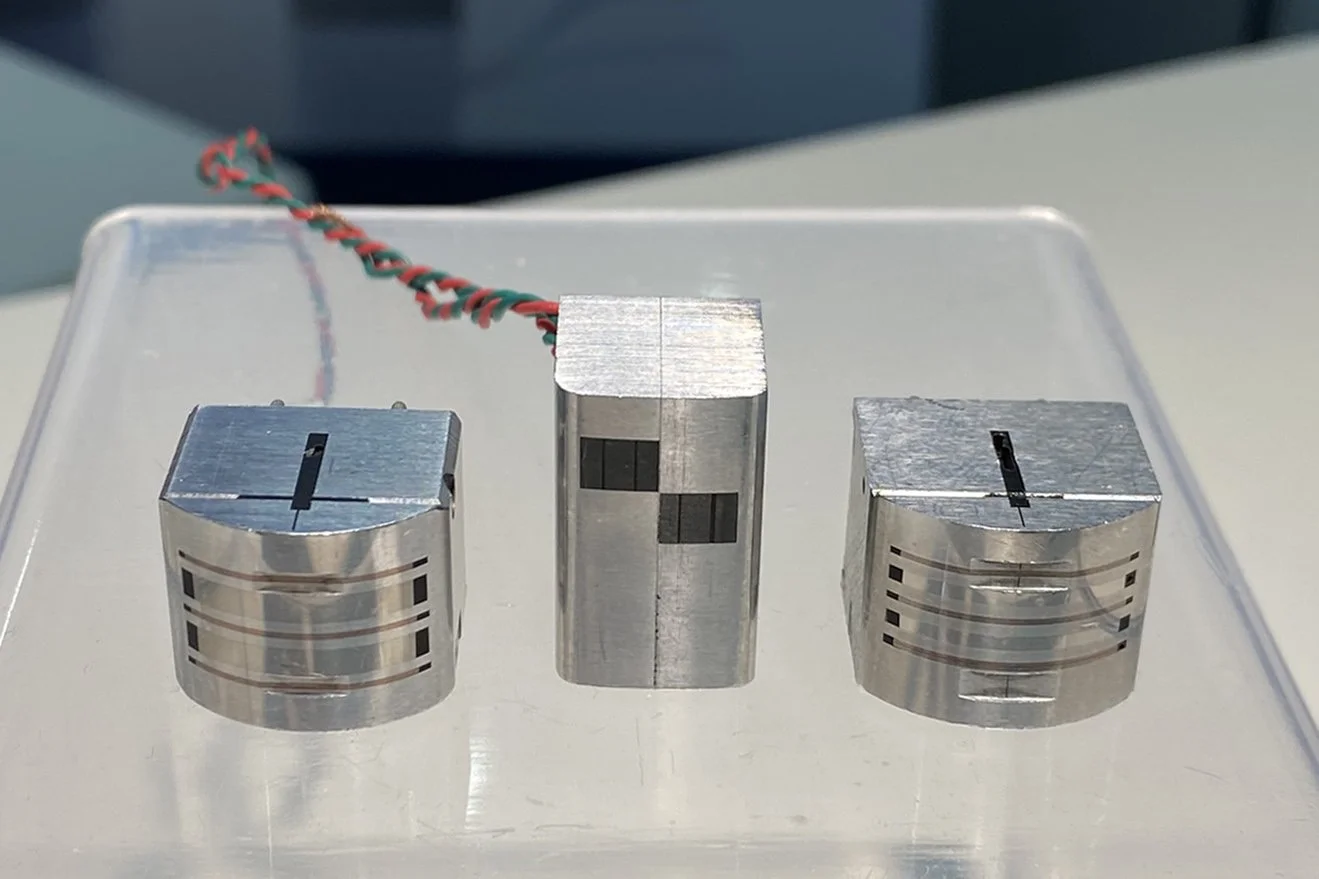
Peter: So, we come to tape heads, the main topic of our interview. At the beginning of the century these very specialized heads were only a few percent of our turnover. From 2010 and 2011 onwards, we needed more production capacity for our banknote sensors. Consequently, in 2014, we made a final call for orders to all the audio customers we knew worldwide. The response was unexpected. They said, “please don't stop producing audio heads”, and at the same time they ordered enough tape heads to keep our audio production alive. Furthermore, we experienced interest from people who were developing new tape recorders and from audiophile listeners who wanted to refurbish existing equipment. Amazingly it opened new markets for us. Today, audio applications account for about 15% of our production and are growing in importance. It's very exciting to see that there is a consistent global future for tape heads. We are the last company to manufacture them on an industrial scale. In 2008 we decided to gradually relocate our production to our production facility in Romania. Why? There are excellent engineers there available, and we can produce more cost effective. At the time, we were one of the first foreign companies to start production in Oradea, close to the Hungarian border. Today, it is a vast industrial area. This offers us a very good opportunity, as we can purchase many components and raw materials locally. It opens the possibility of having sufficient capacity for new projects with higher quantities. This is not currently the case in the audio sector, where we are talking about ten or a hundred units. But if higher quantities are requested in the future, we have the capacity for growth.
Claus: Do you manufacture tape heads for all brands?
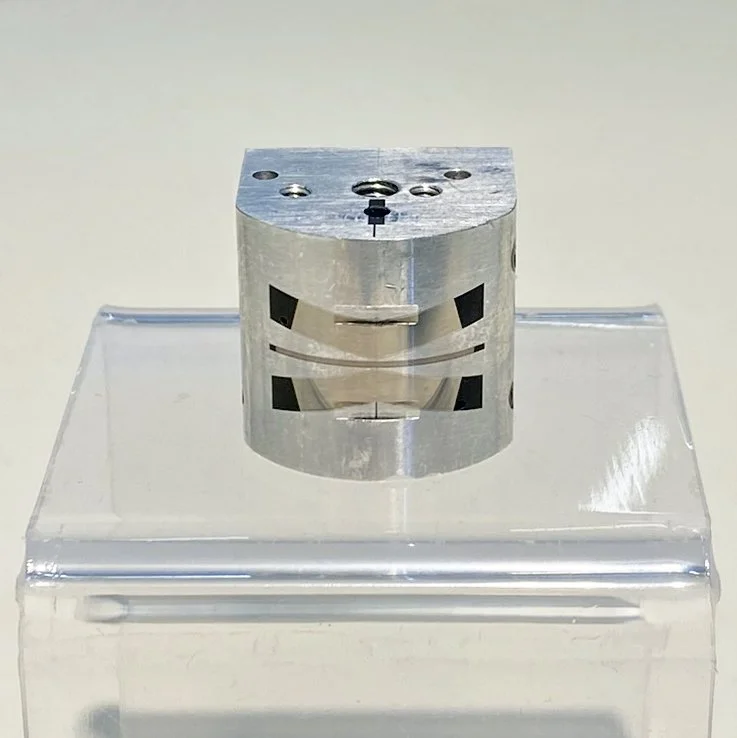
Peter: Historically, we manufactured tape heads for the Studer and Revox brands. Studer had its own manufacturing unit for tape heads. At the end of the 1980s or beginning of the 1990s, I'm not entirely sure, the production facility burned down. They outsourced manufacturing tape heads to us. To this day, we still manufacture replacement heads for Studer according to the original specs. Revox is a different story. We have always been one of the two manufacturers of replacement tape heads for Revox. We still do this and have very good contacts with the people at Revox in Villingen-Schwenningen. We are grateful that they developed the Revox B77 MK III and they are manufacturing it again. It is an honor for us to be able to build the tape heads for this. Traditionally, we manufactured a whole range of heads for other global brands. We still have parts in stock for some of them. When customers come to us and need a ¼-inch tape head for an Otari machine, for example, we have no problem selling them this part, if available. However, there is a very large number of different tape heads for various brands. Coming back to Studer, the catalog of tape heads is 30 pages long. Each page contains 20, 30, or more different heads. It is often difficult to find the right tape head for the application in question. We understand the requirements and want to help all enthusiasts who still have very nice tape recorders but can no longer find replacement parts. For example, we started working with the US tape manufacturer ATR to bring back 1/4- and 1/2-inch tape heads for Ampex/ATR machines. We are working closely with Greg Orton from Flux Magnetics in California on this. We hope the heads will be available for sale through ATR in the last quarter of this year. We are currently developing quarter-inch tape heads for use in TEAC, Otari, and Technics. The prototypes are currently being tested to meet customer requirements. If they are technically correct, they will be available at the beginning of 2026.
Claus: Let's say I have a studio with four Telefunken M15A recorders whose tape heads are worn out. If you don't have the heads in stock, how can you help me?
Peter: There are several solutions for this. The first option would be to build new heads. If these are parts we've never done before, we must calculate the development costs. If you're an enthusiast and only need a few heads, the development costs will be relatively expensive for you. In the past, some enthusiasts found a community of, say, 50 people who then shared the costs. This is usually done through an intermediary, who then resells the parts to his friends. This is a good way for us to help these people. For the second option, I need the best possible photos of the top and side of the heads and a reference code, if available. Then, together with our engineers, I can assess the status of the head. If there is still enough material available, and the head has not been worn down too much, we can process it on our grinding machines and reconstruct the curvature. If you are lucky, you will get it back with another 30-40% of the playing time. That's about +/- ten years of use for enthusiasts. The price for this is significantly lower than for the development of a new tape head. You will need to send your parts to Belgium for this. We need some time for the exact assessment, processing, and transport. The third option would be relapping, which is offered by many people worldwide. You must be very experienced to do this work. Most of the good relappers are over 80 years old and no longer have enough time for all the demand. I have also seen enthusiasts try it themselves and destroy a perfectly good tape head. Our employees are very experienced because they are familiar with a wide range of magnetic heads, including those for other applications. They can decide which method is best for saving as much of the remaining service life as possible.
Claus: What is the process for developing new tape heads?
Peter: New manufacturers of tape recorders are a very exciting market segment. We see companies that started five or six years ago and now have their devices on the market. Most inquiries about tape heads come to us because there are not many manufacturers on the market who can produce tape heads with an industrial background and capability. When someone starts building a new machine, the first thing they think about is where they can buy the tape heads or who can develop them. These are customized new tape heads with the exact features the customer wants for their future machine. Such a project usually starts with a simple phone call and a few questions. Soon we will talk about the cost of the project. Once the requirements have been clarified, we discuss them with our engineers. Then we start the development and produce an initial design, which is sent to the customer for review. If everything is OK, we build a few prototypes. If these are tested and approved, we go into series production. The entire process takes about two years, sometimes a little less.
Claus: What materials do you use for audio tape heads?
Peter: One of our markets is tape archives. There is a large amount of tape available worldwide, for example at broadcasting companies that want to secure their archives. In most cases, the transfer is from tape to digital. This requires many tape machines that play the tapes 24/7. For this application, we recommend very hard-core material. Many people say it is glass, but that is not correct. It is a hard metal alloy. The disadvantage is that it is said to make the sound a little harsh. For enthusiasts, it is better to use tape heads with Mu-metal as core material. It produces a warmer sound. Enthusiasts do not need this durability, so they do not need this hard material. They do not need to invest in hard core material magnetic tape heads, which are 20-50% more expensive. Ultimately, however, it is up to everyone to make the right decision for themselves.
Claus: How did you come to AM Belgium?
Peter: To be honest, originally, I'm not really an audiophile. I’m an optician from education. I worked in this sector for many years. I sold a few years electronic measuring devices for opticians. And worked for an Italian manufacturer of stylish and fashionable sunglasses, where I got my commercial skills. When I was in my 40s, I was looking for a company with international contacts that manufactured a niche product. The business of magnetic heads intrigued me because this old analog technology survived the 1980s, 1990s, and 2000s and is still in demand today.
Claus: Can you say anything about the future of this magnetic tape technology?
Peter: For instance, film archiving is an interesting niche. There are historical films with audio tracks all over the world. The machines or tape heads for these applications are old, hard to find or no longer available. It's not a huge market, but nevertheless an interesting market segment. On the other hand, I see that many tape heads are no longer available in the cassette deck sector. Young people are interested in cassettes. They don't have the knowledge to restore the old reel to reels and can't afford to pay 15,000 or 20,000 euros or dollars for a new tape machine. So, the young look in the direction of audio cassettes. When they pick up a portable cassette player or walk man, they are thrilled about the analog music experience. That's the first step before maybe a cassette deck and then probably, in search of an even better analog sound experience, move on to ¼ inch tape and a proper reel to reel. It's a very interesting development when young people enter this market. There are interested parties who decided to have new heads developed for Walkman, cassette decks and eventually tape machines. Exciting analog times.
Claus: Do you have a message for our readers at the end of the interview?
Peter: Yes, I do. And thank you again, Claus, for the opportunity to share our story. My message to your readers is simple: analog is not dead. It’s evolving, driven by passion, whether from seasoned audiophiles restoring iconic machines or from younger generations discovering the tactile magic of analog for the first time. We at AM Belgium are proud to be part of this journey. We are committed to supporting the global analog community, not just by manufacturing magnetic tape heads, but by preserving knowledge, engineering excellence, and quality craftsmanship that might otherwise disappear. To those restoring, building, or dreaming of analog equipment: don't hesitate to reach out. Whether you’re in need of a replacement part, looking to develop something entirely new, or simply trying to understand what’s possible: we’re here, and we’re listening. These are truly exciting analog times, and we’re honored to help keep the reel turning.
Claus: Thank you very much for the interview!
May 18, 2025, HIGH END Munich
Author: Claus Müller, October 31, 2025