
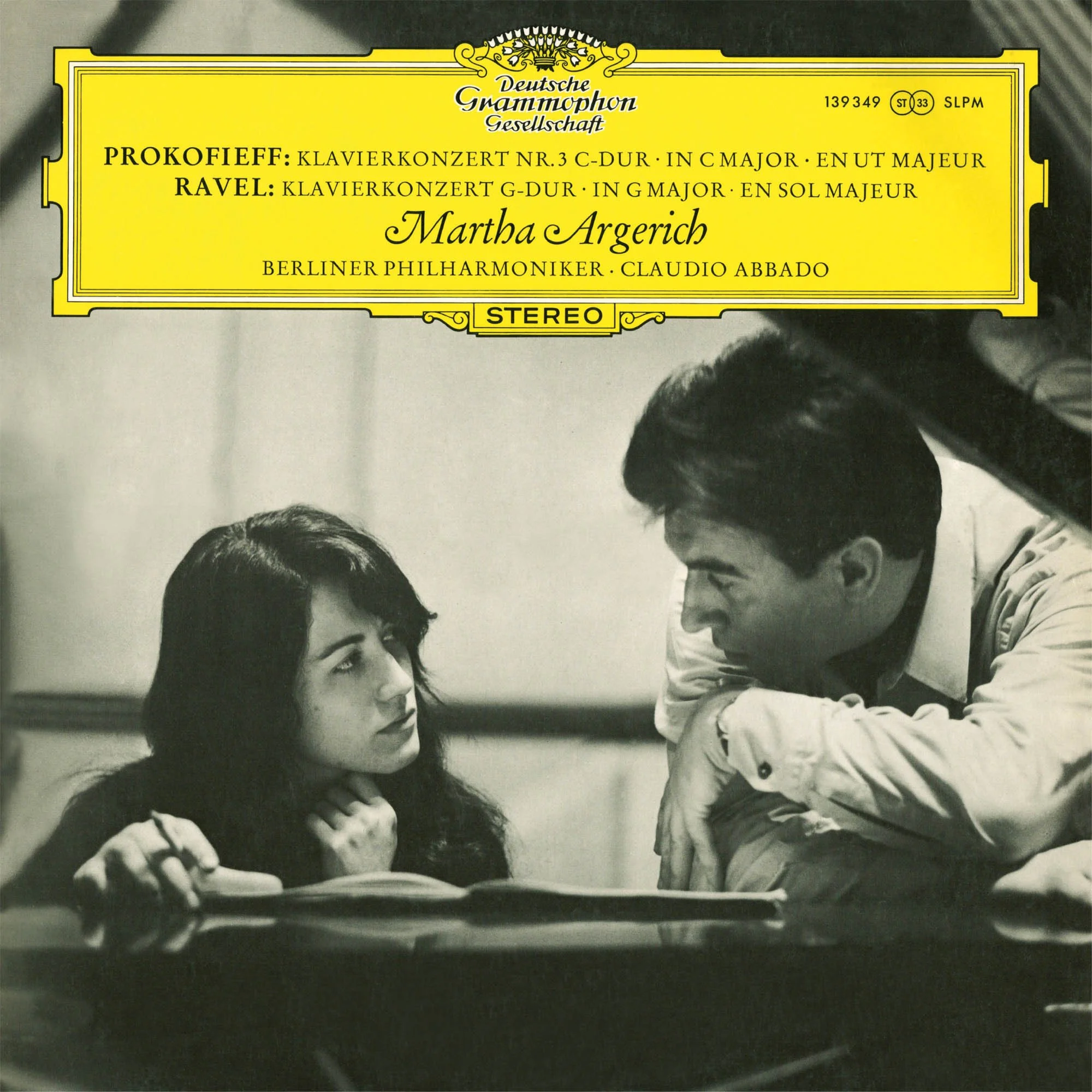
Author: Felix Hennevogl
In July 1960, the 19-year-old Argentine pianist Martha Argerich traveled to Hanover to record her debut album for Deutsche Grammophon at the Beethoven Saal. Martha had already given concerts in her home country as a seven-year-old; she performed before Arthur Rubinstein, Claudio Arrau, and Friedrich Gulda. The latter, himself only 25 years old at the time, took the 14-year-old on as a student in Vienna. The Argerich family subsequently moved to Vienna, where her parents secured positions at the Argentine Embassy.
Two years later, at age 16, she confidently won the prestigious piano competitions in Bolzano and Geneva. Concert tours and recitals followed, and Deutsche Grammophon signed the teenager a contract. But soon after her first recording, her career stalled. Martha Argerich fell into a crisis, became the mother of a daughter at the age of twenty, and withdrew almost completely from the public eye for four years. It seemed to be the end of a child prodigy’s career.
It was only her teacher and mentor, Stefan Askenase, who was able to persuade her to make a comeback. In 1965, she achieved her international breakthrough in Warsaw: she won first prize at the International Chopin Competition, while the actual favorite, Arthur Moreira Lima, took only second place. Her highly virtuosic, percussive, and at the same time clearly structured playing astonished the piano world. The British label EMI subsequently signed the young talent for a debut recording at Abbey Road Studios featuring works by Frédéric Chopin. However, the recording was not released until 1999, as Deutsche Grammophon enforced an exclusive contract that initially prevented its release. (Available as a REVOX Horch House master tape copy, Martha Argerich - Chopin)
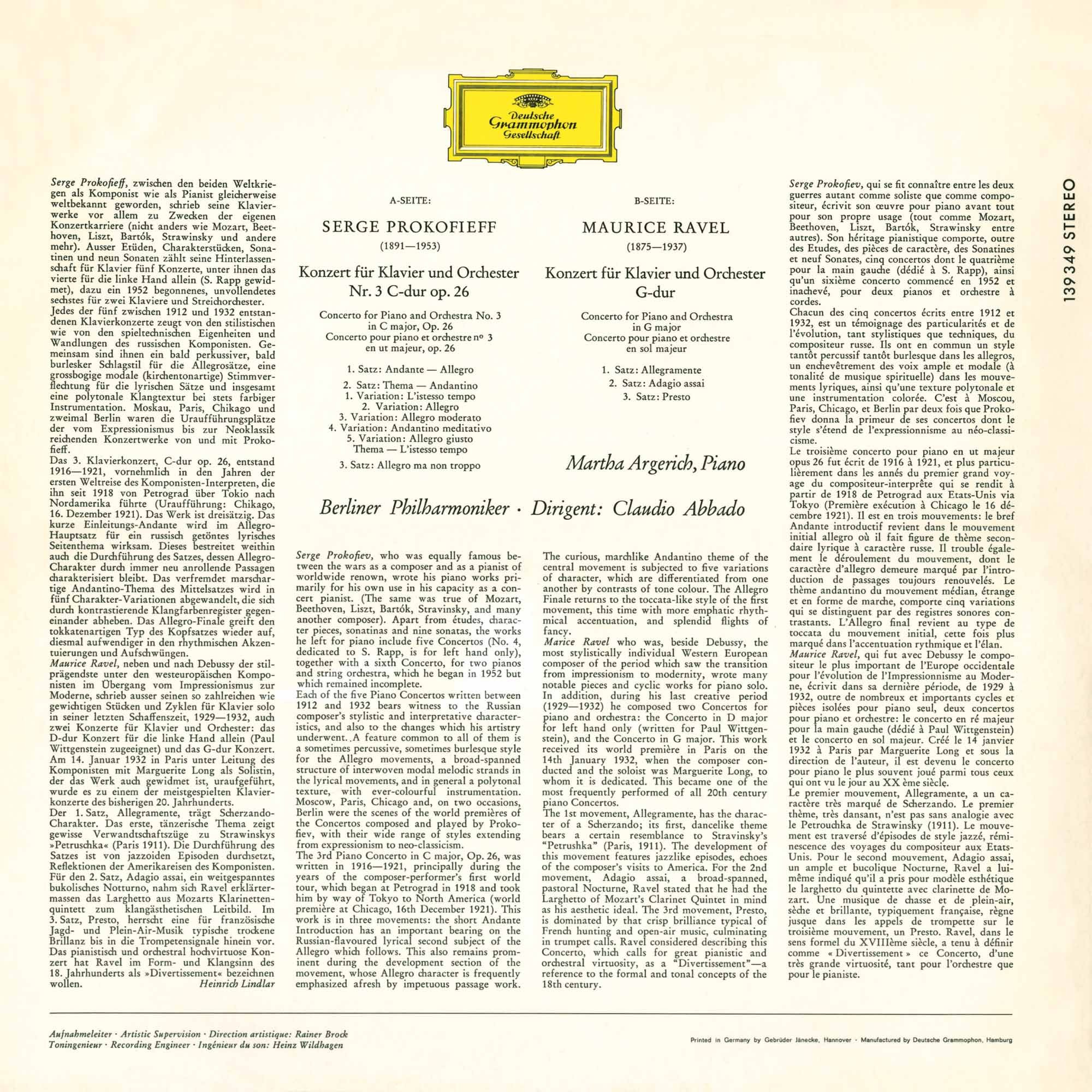
In January 1967, Deutsche Grammophon produced an almost identical re-recording of the EMI sessions in Munich, followed by two additional albums featuring piano concertos by Sergei Prokofiev, Maurice Ravel, Frédéric Chopin, and Franz Liszt, conducted by the equally up-and-coming Claudio Abbado. These three recordings ultimately cemented Martha Argerich’s international success.
Ravel
Maurice Ravel’s (1875–1937) Piano Concerto in G Major is a masterfully orchestrated work—one of the most fascinating piano concertos ever composed from this perspective. Ravel struggled with this concerto for a long time. He was determined that it should be a success and, at the same time, become part of his own repertoire as a pianist. The result seems light, natural, and perfectly harmonious, yet the work involved pushed him to his limits.
“Only when my work is finished will I rest - in this world … or in another!” he confessed. Regarding the slow movement, he said: “I wrote it measure by measure, and I nearly died in the process.”
An illness that set in during the composition process prevented Ravel from performing the work as a pianist. On January 14, 1932, he conducted the world premiere in Paris with soloist Marguerite Long and the Orchestre Lamoureux. The American premieres followed as early as April 22, 1932, taking place simultaneously in Boston and Philadelphia.
The work requires a chamber-music-like interplay between the soloist and the orchestra. The wind instruments take on roles almost as important as those of the solo piano, and in the first movement, the harp even plays the cadenza normally reserved for the soloist. The concerto oscillates between French Impressionism, Spanish folklore, and jazzy echoes of Gershwin.
The very beginning is a stroke of genius: A crack of a whip signals the start, instantly transporting the listener into a circus ring. The whip effect is created by two pieces of wood connected by a hinge. After a few Spanish-sounding measures, the atmosphere shifts; “Gershwin” makes an appearance and is soon replaced by impressionistic timbres.
The enormous standards Ravel set for himself are underscored by his statement: The slow movement should come as close as possible to the sound world of Mozart’s Larghetto from the Clarinet Quintet—a movement that ranks among the most beautiful compositions of all time. Ravel does not fall short of this standard. In the second movement, he succeeds in creating a masterpiece.
The music begins on the solo piano in 3/4 time, without ever becoming a waltz. Jazz lovers may be reminded of Bill Evans or Keith Jarrett. The winds enter artfully via the flute, oboe, and clarinet, before a captivatingly beautiful English horn solo resounds at the end, accompanied by the piano. Enchanting, without ever becoming kitschy.
The concluding third movement is a brilliant finale with distinct jazz influences: a frenzied piano and a swinging orchestra with relentless drive and occasional dissonances. The piece ends after just 3 minutes and 55 seconds with a thunderous drumbeat. At around 21 minutes, the entire concerto remains refreshingly short.
Martha Argerich has performed this concerto—as well as Prokofiev’s Third—countless times and has officially recorded it three times. In this first recording, she adheres strictly to the score. Her runs and trills sparkle; everything seems perfectly balanced. Every transition, every phrase is worked out down to the last detail. Her sound is percussive, brilliant, and full of energy.
Later, she played the concerto more freely and somewhat slower, yet the cohesion and freshness of this first recording remain unmatched. The Berlin Philharmonic follows her precisely, delivering outstanding wind solos and smooth transitions. In the slow movement, an impressive chamber-music-like harmony is achieved. Here, a different side of Argerich emerges - controlled, breathing, and with an almost ascetic concentration.
The finale ultimately combines energy and precision into a highly virtuosic grand finale, which, in its rhythmic rigor, seems as compelling as it is risky. It is worth noting that in the first movement, the jazz-like elements could occasionally be interpreted in an even looser and more spontaneous manner. Also, the Berlin Philharmonic likely plays the final movement today with greater virtuosity and more rhythmic finesse. In 1967, they were not quite able to keep pace with their brilliant soloist.
Prokofiev
Unlike Ravel, Sergei Prokofiev (1891–1953) was fortunate enough to perform his Third Piano Concerto in C major himself. He composed it in the summer of 1921 in Brittany for his upcoming tour of America. In December of that same year, it was successfully premiered by the Chicago Symphony Orchestra, with the composer himself at the piano.
However, shortly thereafter, the concerto was panned by audiences and critics alike in influential New York. Disappointed, Prokofiev returned to Europe, unaware that this work would one day become his most frequently performed concerto.
And Martha Argerich played a key role in that. Her recording literally breathed new life into the work, and her interpretation set new standards. Not since Prokofiev’s own (technically inadequate) 1932 London recording under Piero Coppola had this concerto been heard with such vitality and excitement.
The difference is particularly evident when compared to other recordings from the 1960s. The Living Stereo production with Van Cliburn from Chicago seems somewhat indecisive and ponderous at its rather slow tempos, while the Mercury recording with Byron Janis from Moscow - though played at a brisk pace and spectacularly recorded - appears comparatively wooden and rigid musically.
The work begins dreamily, almost like an Impressionist sunrise. But suddenly the violas kick off the race, and the piano kicks in. Argerich launches into the piece with overwhelming energy and captivates everyone involved. Radiant piano runs, whistling flutes, rumbling basses, and biting pizzicatos from the strings, brass fanfares, Stravinsky-Esque themes, and abrupt turns of phrase are all fascinating.
In the second movement, a march first appears, introduced by the flutes. A variation movement begins. Trills on the piano set the soloist in motion, followed by shimmering runs and percussive note repetitions. Unlike in Ravel’s works, there is no continuous slow movement in the classical style. Only occasionally do dreamy episodes appear as quiet variations. It feels like a dream journey through shifting fantasy worlds.
The final movement begins pulsating with the bassoons. A ghostly middle section is at times almost reminiscent of Rachmaninoff. The opening theme returns, and then - figuratively speaking - the roof flies off. A furious final movement.
In the Prokofiev concerto, Martha Argerich challenges the Berlin orchestra with her ultra-precise and percussive piano playing. The tempos of the outer movements are fast and relentless. In the finale, she even seems to rein in her temperament a bit at times so as not to outpace the (at that time exclusively) male members of the orchestra.
After 27 minutes, one is left in awe. Prokofiev has created a perfect piano concerto. Each of the three movements lasts almost exactly nine minutes, down to the second.
Claudio Abbado delivers an interpretation that shows the orchestra’s strengths: outstanding wind solos, excellent string playing, and great tonal flexibility. The orchestra lays the atmospheric foundation for each movement, while Argerich builds upon and shapes it. Together, they have created a recording that remains a landmark to this day.
Happy Birthday, Martha Argerich!
On June 5, 2026, Martha Argerich celebrated her 85th birthday. Since the mid-1980s, she has largely withdrawn from solo piano recitals and has also significantly reduced her repertoire as a soloist in piano concertos. Her focus has been on Robert Schumann’s Piano Concerto (recommended recording: Harnoncourt, Amsterdam, Teldec) as well as the works by Maurice Ravel and Sergei Prokofiev discussed earlier. These were complemented by several Mozart concertos, Ludwig van Beethoven’s Piano Concertos Nos. 1 and 2, occasional works by Franz Liszt and Frédéric Chopin, and, rather rarely, Sergei Rachmaninoff’s Piano Concerto No. 3 (recommended recording: RSO Berlin, Chailly, Decca).
From the analog era, solo recordings from 1967 to 1980 have been preserved in very good sound quality. Particularly recommended are Franz Liszt’s Sonata in B minor and Frédéric Chopin’s 24 Préludes, Op. 28, Maurice Ravel’s Gaspard de la nuit, and Johann Sebastian Bach’s Partita No. 2 in C minor, BWV 826.
Martha Argerich devoted herself to chamber music with great intensity and performed with numerous outstanding artists, including Gidon Kremer and Mischa Maisky (recommended: Prokofiev violin sonatas with Gidon Kremer; Schumann/Schubert recordings with Mischa Maisky). In addition, she made numerous four-hand recordings with Nelson Freire, Alexander Rabinovich, Stephen Bishop, and Mikhail Pletnev—all of them recordings of the highest caliber. Later, she founded her own festival in Lugano, which also yielded a wealth of remarkable chamber music recordings.
In recent years, the now 85-year-old has appeared on stage free from her former stage fright. Her technical mastery and expressiveness remain exceptional. Anyone who can attend one of her concerts should seize it - it’s well worth the trip.
The Recording
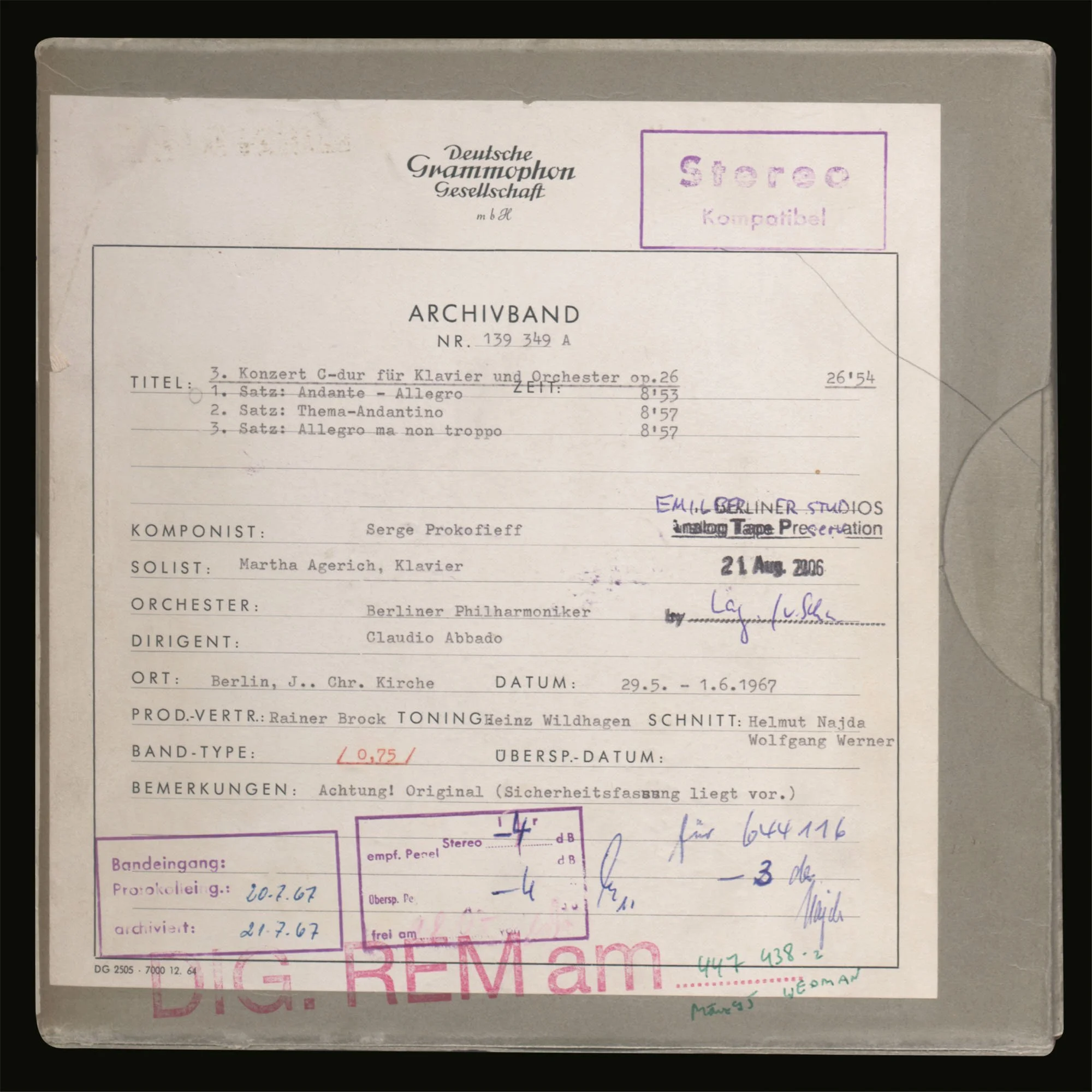
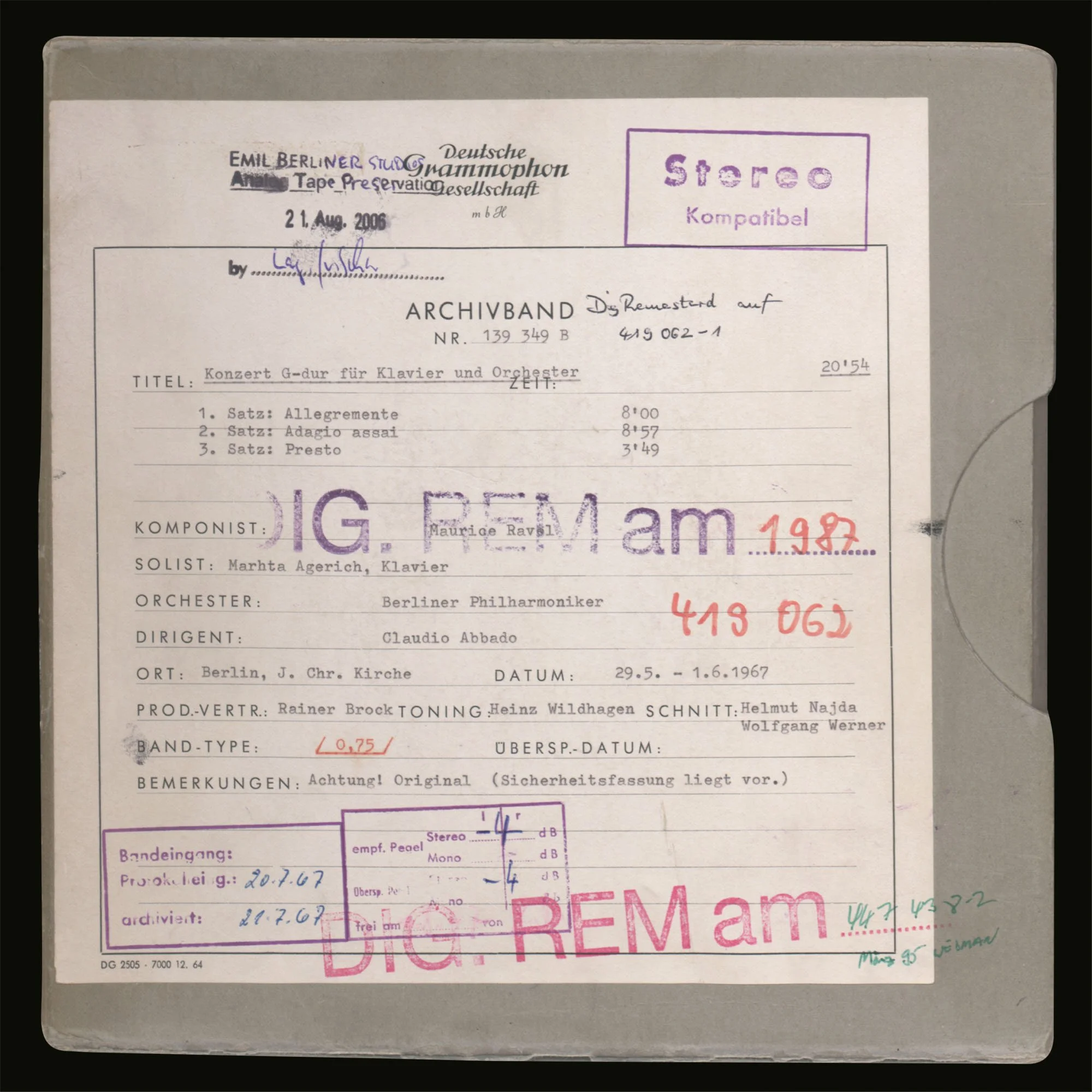
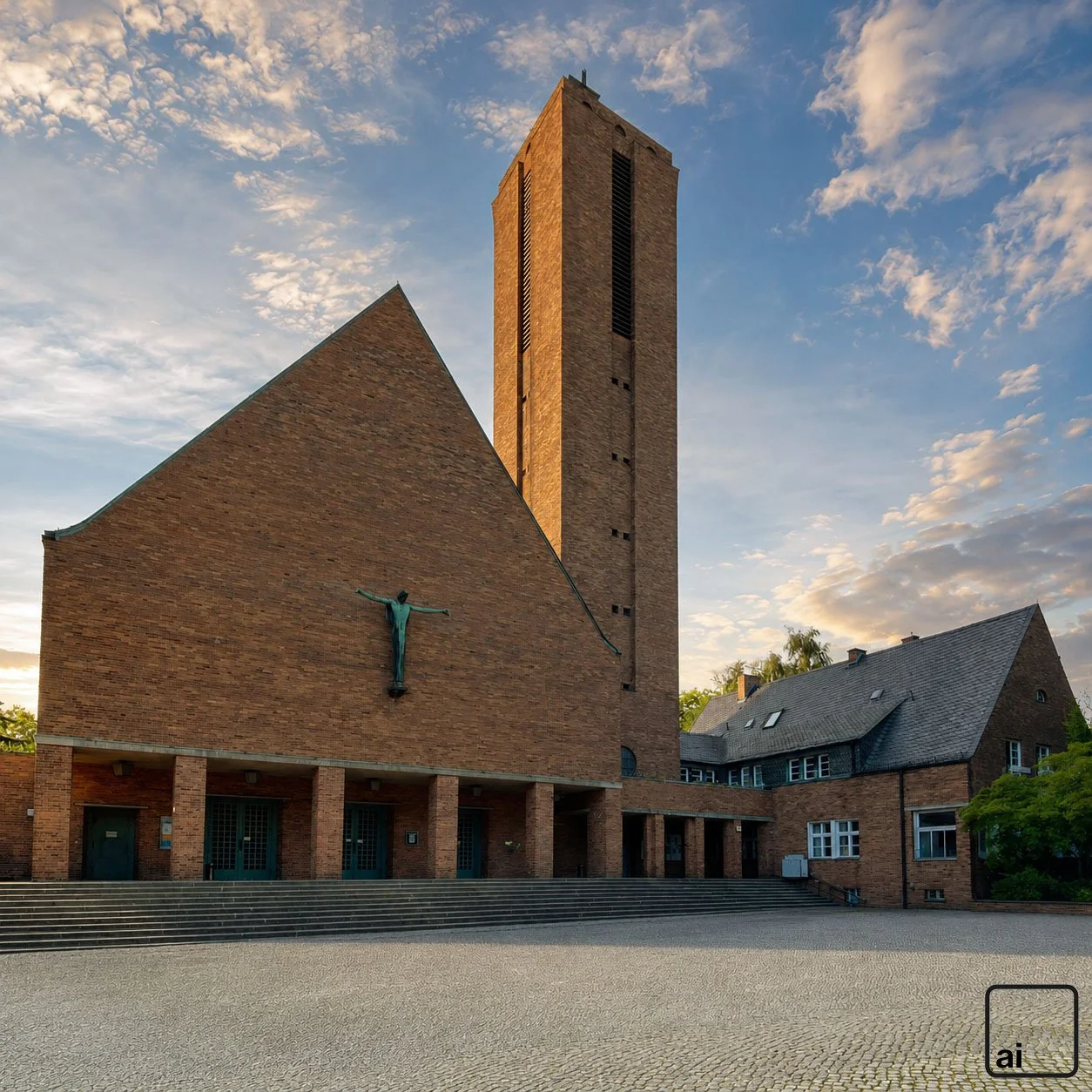
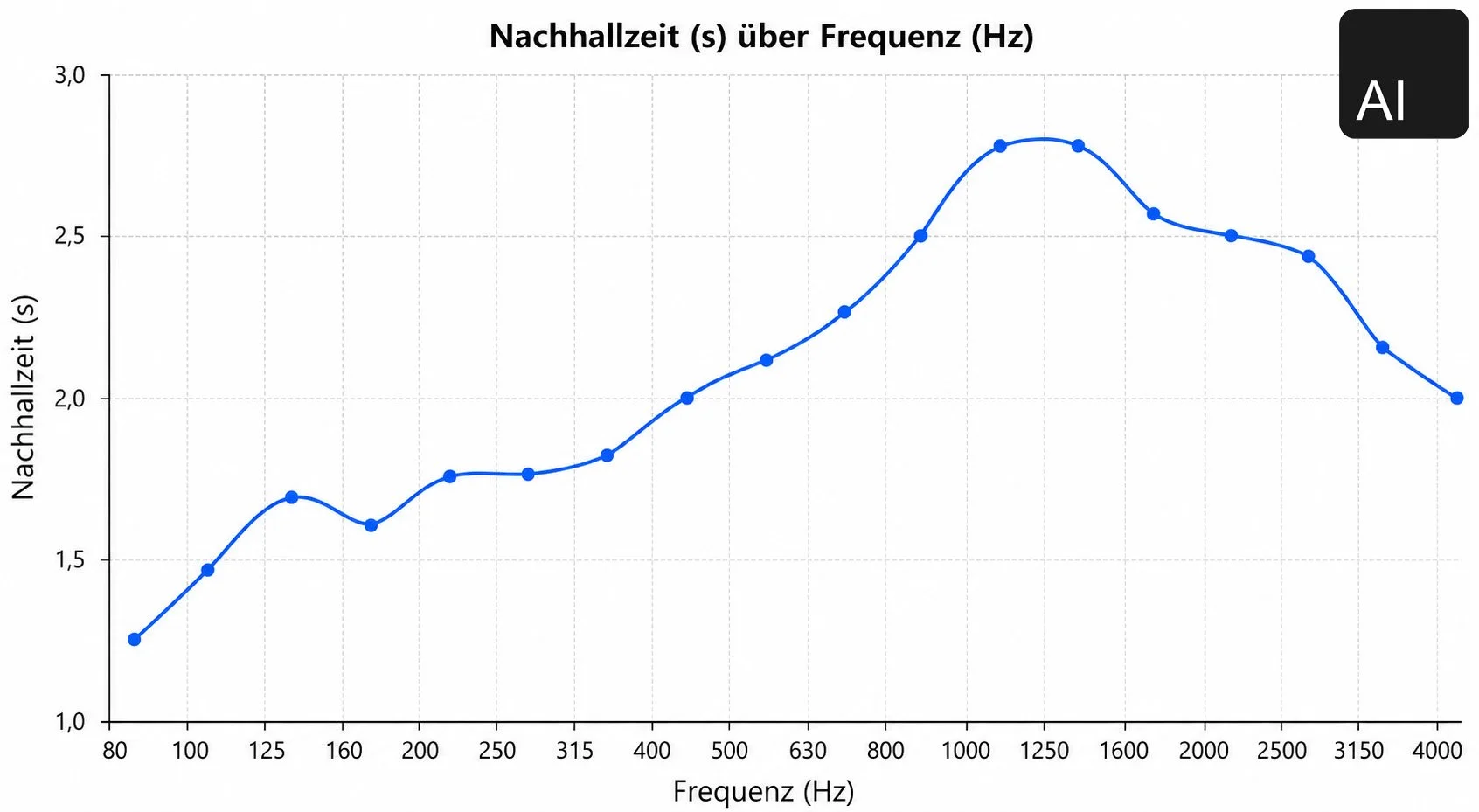
May 29 through June 1, 1967, Jesus-Christus-Kirche, Berlin-Dahlem. Thanks to a unique ceiling construction featuring slotted wooden slats and a massive cavity between the inner and outer shells of the roof—which acts as a bass absorber—the recording venue has a decay time that tapers off in the bass range (see image source). This is highly valued by many sound engineers, as it allows them to achieve a clear and vivid recording using only a few microphones.
The trade-off is a sound with relatively little bass and a tendency toward overemphasized mids. This characterizes numerous DGG productions from the 1960s and 1970s. Recording engineer Heinz Wildhagen produced some outstanding recordings here, but on those days in late May 1967, he did not choose the most ideal microphone placement. It is possible that the intention was to capture the character of the music in a particularly present and direct manner; however, the strings lack some warmth and fundamental tone, and the bass range remains underrepresented overall. The high woodwinds, on the other hand, are captured with beautiful timbres and good spatial layering. Despite being well integrated into the orchestra, the piano does not sound entirely balanced. The midrange is slightly muffled, and the bass sounds somewhat weak compared to the treble. Overall, not an audiophile recording, but still a good one, which won both the German Record Critics’ Prize and the French Grand Prix du Disque in 1968.
The Master Tape Copy
Christoph Stickel processed the original recording using his special analog remastering process. Compared to the vinyl record, the tape offers an expanded dynamic and frequency range. The DGG’s digital remaster on CD also offers this, but Christoph Stickel succeeds in better balancing the recording between the fundamental and the upper midrange. The soundstage appears wider and deeper. The piano sounds more balanced and the strings warmer, without losing any presence. This makes the REVOX Horch House master tape copy the best version of these recordings available.
Translated from German with DeepL.com (free version)
Martha Argerich
Prokofieff / Ravel
Berliner Philharmoniker - Claudio Abbado
Publisher: REVOX Horch House
Playing time: 48 min
Specifications: half track ¼", stereo, RTM SM900, CCIR, 510 nWb/m, 38 cm/s
Reel(s): 2 standard metal reels, with stickers
Packaging: 1 deluxe cardboard box
Inserts: 1 insert folder with 2 insert sheets and 4 photo prints
Homepage: https://www.horchhouse.com/

Music:

Interpretation:
The entire content and the individual elements of the web page are the intellectual property of Claus Müller and are subject to copyright protection. The text of this review is the intellectual property of Felix Hennevogl. The contents may not be copied or imitated in whole or in part by the user; this applies to texts, logos and image components. Any modification, duplication, distribution or reproduction of the website or parts thereof, in any form whatsoever, is not permitted without the prior written consent of Claus Müller or Felix Hennevogl (for the text of this review).
Der gesamte Inhalt und die einzelnen Elemente dieser Webseite sind geistiges Eigentum von Claus Müller und unterliegen dem Schutz des Urheberrechts. Der Text dieser Rezension ist geistiges Eigentum von Felix Hennevogl. Die Inhalte dürfen vom Nutzer weder kopiert noch im Ganzen oder in Teilen imitiert werden; dies gilt insbesondere für Texte, Logos und Bildbestandteile. Jegliche Veränderung, Vervielfältigung, Verbreitung oder Wiedergabe der Webseite sowie Teilen hiervon, gleich welcher Art, ist ohne vorherige schriftliche Zustimmung von Claus Müller oder Felix Hennevogl (für den Text dieser Rezension) nicht zulässig.