

Author: Claus Müller
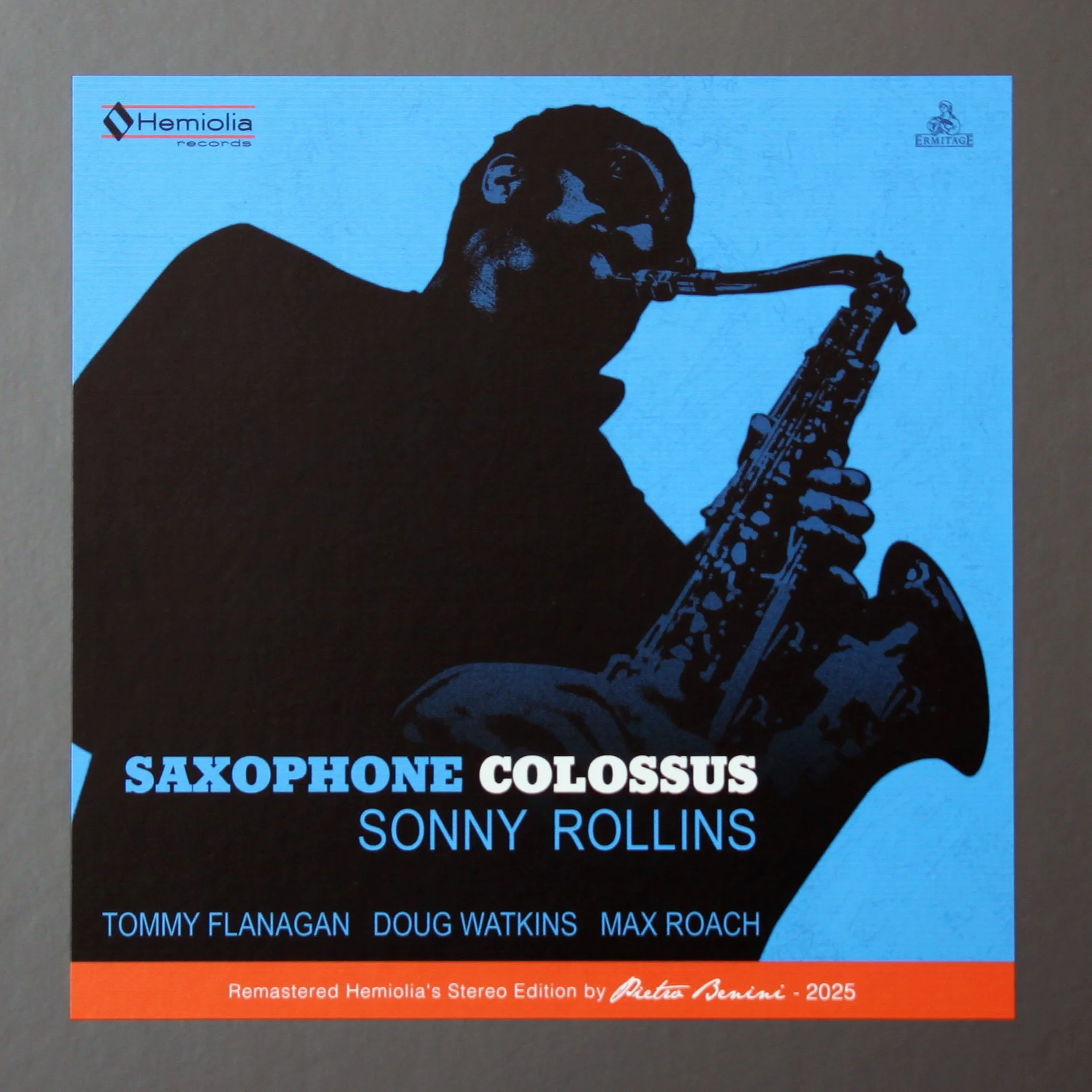
The album Saxophone Colossus, recorded on June 22, 1956, is considered a milestone in hard bop and marks Sonny Rollins’ artistic breakthrough. He performs with Tommy Flanagan on piano, Doug Watkins on bass, and Max Roach on drums.
Tenor saxophonist, composer, and bandleader Sonny Rollins was born in New York City in 1930. He is regarded as one of the most significant and influential musicians in jazz history and is known for his powerful tone, his art of improvisation, and his musical creativity. From his youth, he played with bebop musicians, including Charlie Parker, Thelonious Monk, Miles Davis, Clifford Brown, and Max Roach. He was a virtuoso on the tenor saxophone, improvised at the highest level, and pioneered musical innovation across genres. Rollins had a decisive influence on the development of modern jazz beginning in the 1950s. His influence extends across several generations of jazz musicians. His songs and recordings are part of the core repertoire of modern jazz. Sonny Rollins passed away in May 2026 at the age of 95.
Jazz pianist, composer, and bandleader Tommy Flanagan was born in Detroit in 1930. He was renowned for his elegant style, harmonic sophistication, and his skills as both an accompanist and a soloist. Over the course of decades, he worked with numerous jazz greats such as Kenny Burrell, Milt Jackson, Thad Jones, John Coltrane, Stan Getz, and Dizzy Gillespie. From 1962 to 1978, Flanagan served as musical director and pianist for Ella Fitzgerald. His playing was characterized by technical brilliance, virtuoso improvisation, lyrical elegance, and musical sensitivity. He is considered one of the most respected jazz pianists of the 20th century. Flanagan passed away in 2001.
Double bassist and bandleader Doug Watkins was born in Detroit in 1934. Despite his short life (he died in a car accident at the age of only 27), he became a sought-after sideman and appeared on numerous groundbreaking hard bop recordings. His collaborators included Tommy Flanagan, Barry Harris, Kenny Burrell, Art Blakey, Kenny Dorham, Hank Mobley, Thelonious Monk, J. J. Johnson, and Horace Silver. Watkins was known for his precise timing, his excellent sense of rhythm, his full tone, and his early musical maturity. He is considered one of the most important jazz bassists of the 1950s.
Jazz drummer, composer, bandleader, and educator Max Roach (1924–2007) was born in Newland. He transformed the drum set in jazz from an accompanying instrument into an equal musical voice and is considered a co-founder of bebop in the 1940s. He played with Charlie Parker, Dizzy Gillespie, Thelonious Monk, Clifford Brown, Bud Powell, Charles Mingus, Cecil Taylor, Archie Shepp, and Abbey Lincoln. Roach developed new rhythmic concepts that had a lasting impact on modern jazz drumming, and he is counted among the most significant and innovative drummers in jazz history.
Right from the opener, St. Thomas, Sonny Rollins makes a statement with his art of improvisation. The Caribbean melody provides the foundation for cleverly woven solo excursions. In the ballad You Don’t Know What Love Is, he showcases his lyrical and emotional side, while the track Strode Rode reveals a creative fusion of diverse musical influences. Moritat, the well-known ballad from Kurt Weill’s play “The Threepenny Opera”, is full of suspense and surprises and, for me, is the highlight of the album. On the closing track, Blue 7, Rollins incorporates elements from the previous piece. It’s impressive how, over the course of eleven minutes, he develops complex yet logically structured improvisations from simple motifs. What would Sonny be without his inspired rhythm section, characterized by the elegance and restraint of Tommy Flanagan on piano, the solid foundation provided by Doug Watkins on bass, and the innovative drumming of Max Roach? The musicians combine melodic clarity with virtuosity and a joy of playing. Saxophone Colossus is one of the most perfect recordings in jazz history and is regarded as one of the seminal works of hard bop.
Although it’s safe to assume that Rudy van Gelder made full use of the technology available at the time, a few details of his recordings remain controversial. The bass is clear, but exhibits a slight thickening in places, as can be heard on many recordings from that era. The piano has a slight tinkling quality and was mixed somewhat into the background. The saxophone and drums shine with a well-balanced frequency response. All instruments are positioned in the center of the virtual stereo image.
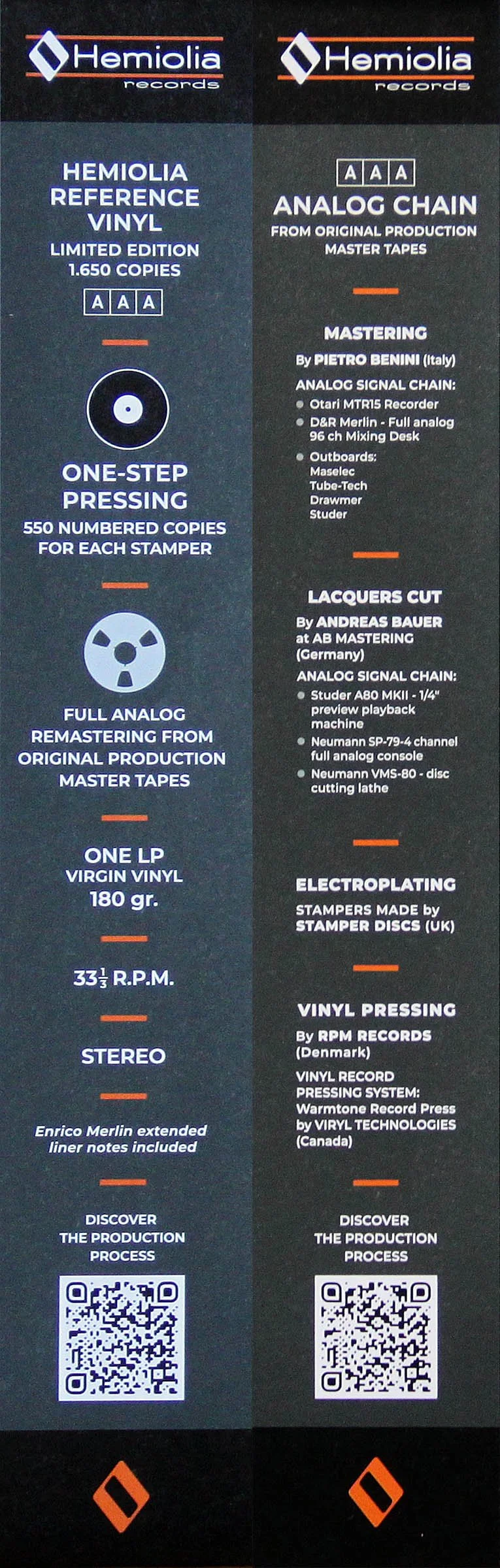
Based on a high-quality analog restoration of the original material, Hemiolia released a One-Step LP, providing a basis for comparison with the master tape copy. With a well-calibrated tape deck, the buyer of the tape hears a 1:1 reproduction of the studio work. Unlike the LP, the tape has no groove noise and features two separate tracks, whereas the pickup must generate the stereo signals from a single groove and the side markings. In a direct comparison, the LP sounds slightly brighter and more treble-heavy on my setup. As a result, the saxophone sounds a touch more artificial and not quite as earthy as on the master tape, which, for its part, offers more punch and impact in the low-frequency range. On the tape, the instruments tend to sound more authentic, natural, believable, precise, and complete. They are represented more physically and can be heard with a greater sense of intimacy. Although both media exhibit very minimal noise, the tape demonstrates better dynamics, which are primarily audible during the drum solos. Even if my wording may seem a bit drastic: when listened to independently of one another, both recordings are perfect. The LP comes very close to the master tape copy when played on a high-quality system. Every detail was carefully considered in the production of this record, making it a top-tier product. The information on the sleeve and in the booklet - which is included only with the record - provides detailed insights. The master tape copy was produced at Hemiolia with the renowned and, in my opinion, impeccable manufacturing quality for which the company is known.
Rudy van Gelder had a knack for recording on June 22, 1956, and so did Pietro Bennini of Hemiolia nearly 70 years later. This important audio document of early recording technology is brought to the present day in sensational quality. I’m delighted that the team at Hemiolia exists - they spare no expense or effort to produce the very best material for us music lovers.
In this interview, you will learn everything about the work of Hemiolia Records:
https://www.audiotapereview.com/202503hemiolia-records
Translated from German with DeepL.com (free version)
SONNY ROLLINS - SAXOPHONE COLOSSOS
Publisher: Hemiolia records HRERM25000254E
Playing time: 40 min
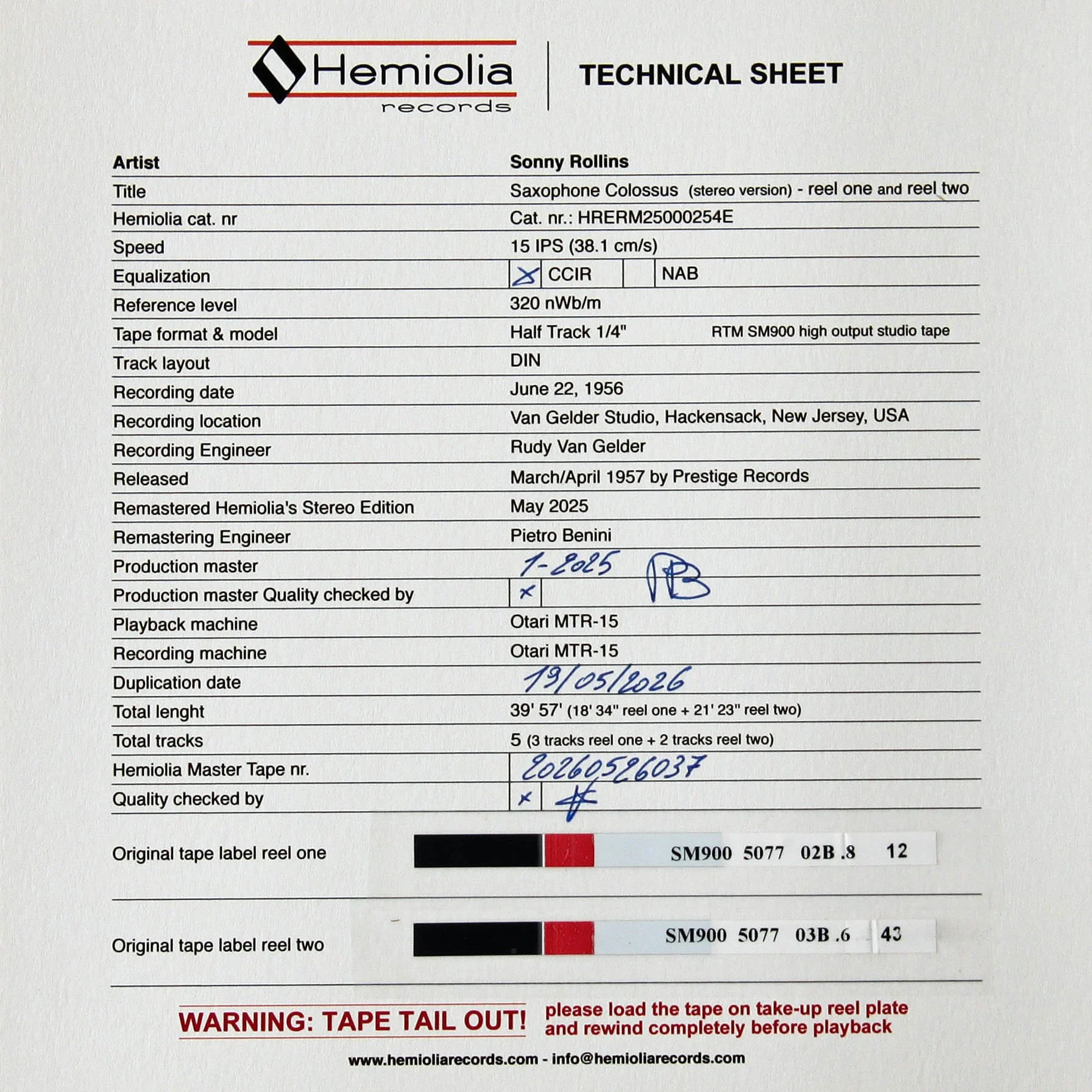
Specifications: half track ¼", stereo, RTM SM900, CCIR, 320 nWb/m, 38 cm/s
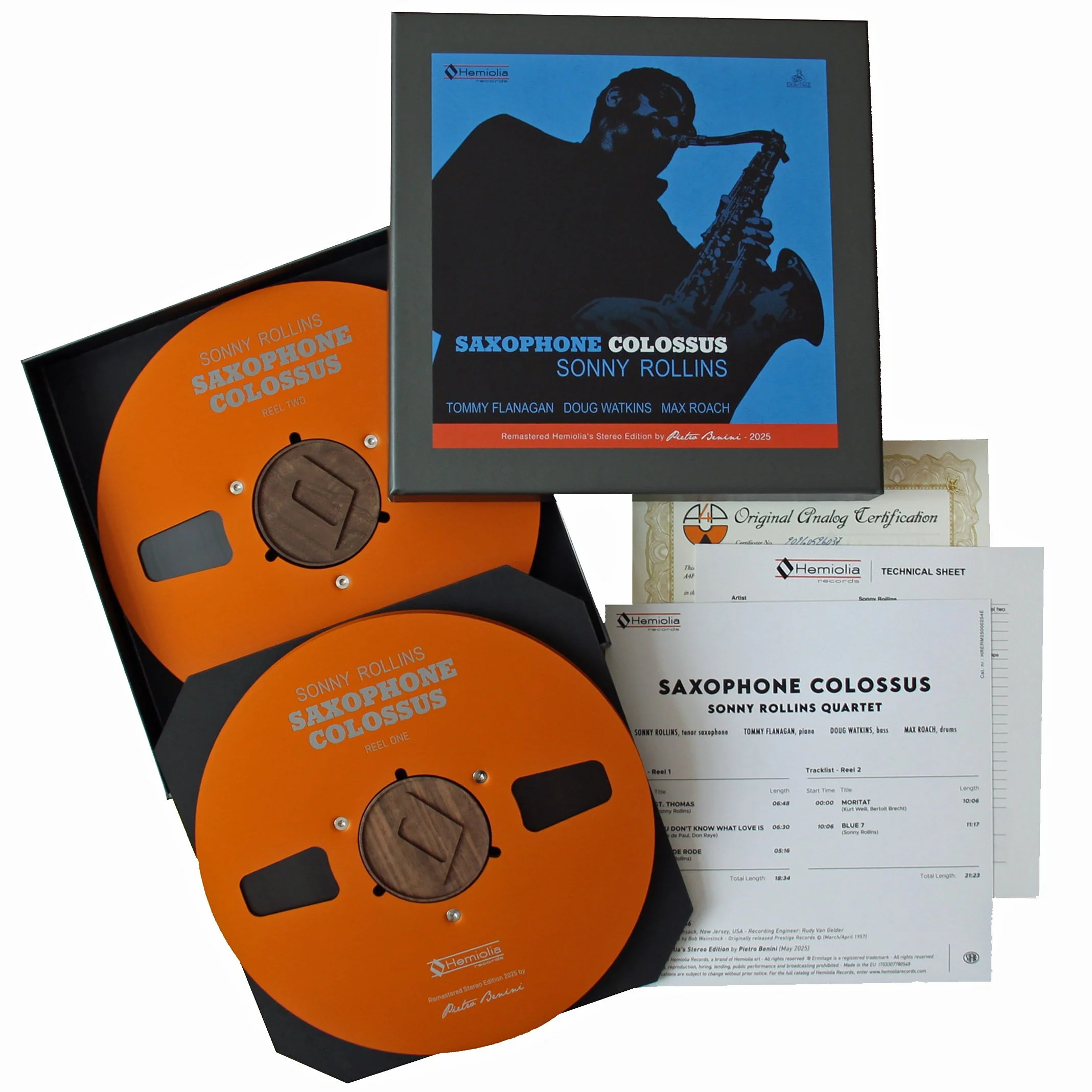
Reel(s): 2 standard metal reels, printed
Packaging: 1 cardboard slipcase, 1 deluxe cardboard box, printed, with spine labeling
Inserts: 3 information insert sheets, 1 printed on both sides
Homepage: https://www.hemioliarecords.com/en/
The entire content and the individual elements of the web page are the intellectual property of Claus Müller and are subject to copyright protection. They may not be copied or imitated in whole or in part by the user; this applies to texts, logos and image components. Any modification, duplication, distribution or reproduction of the website or parts thereof, in any form whatsoever, is not permitted without the prior written consent of Claus Müller.
Der gesamte Inhalt und die einzelnen Elemente dieser Webseite sind geistiges Eigentum von Claus Müller und unterliegen dem Schutz des Urheberrechts. Sie dürfen vom Nutzer weder kopiert noch im Ganzen oder in Teilen imitiert werden; dies gilt insbesondere für Texte, Logos und Bildbestandteile. Jegliche Veränderung, Vervielfältigung, Verbreitung oder Wiedergabe der Webseite sowie Teilen hiervon, gleich welcher Art, ist ohne vorherige schriftliche Zustimmung von Claus Müller nicht zulässig.