Author: Claus Müller
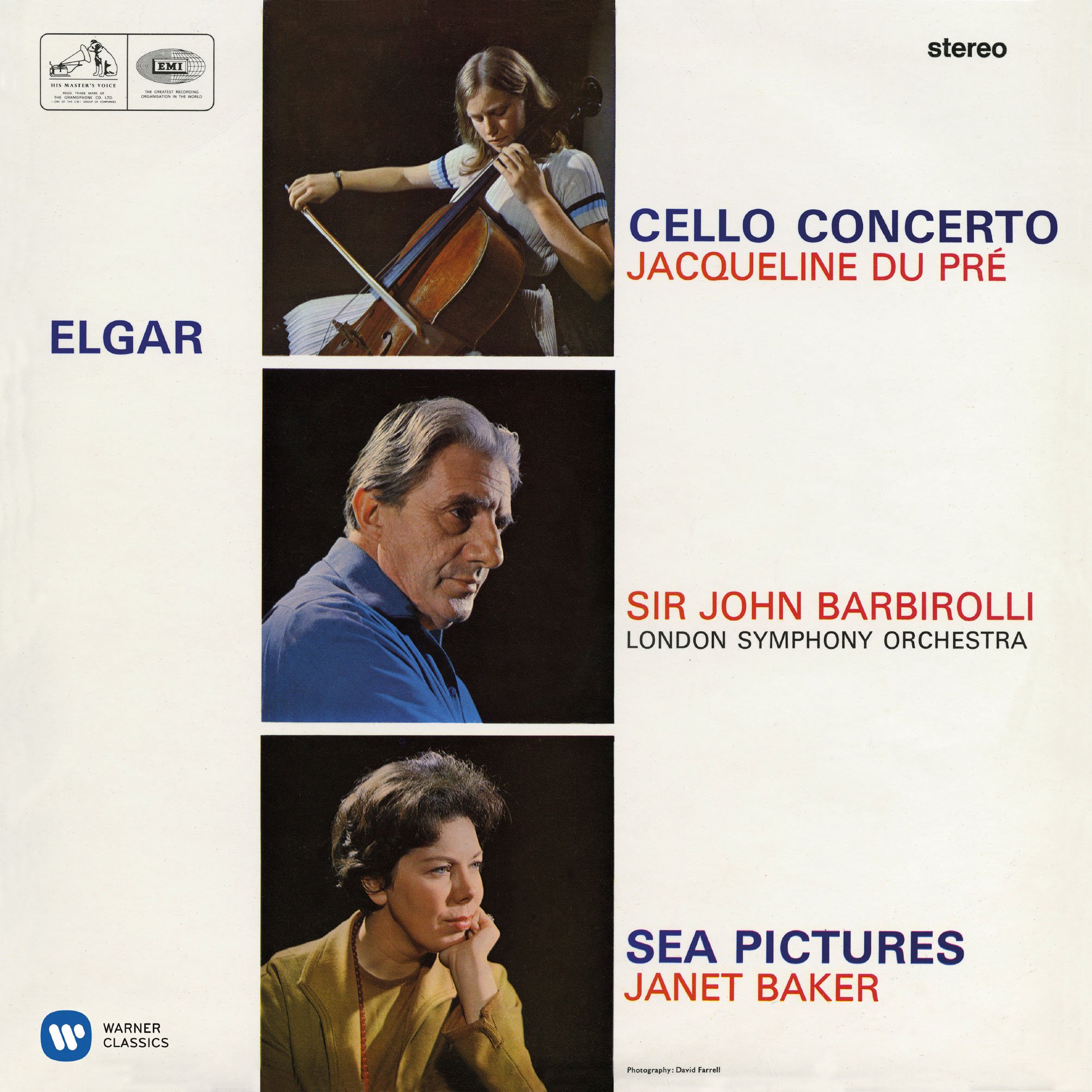
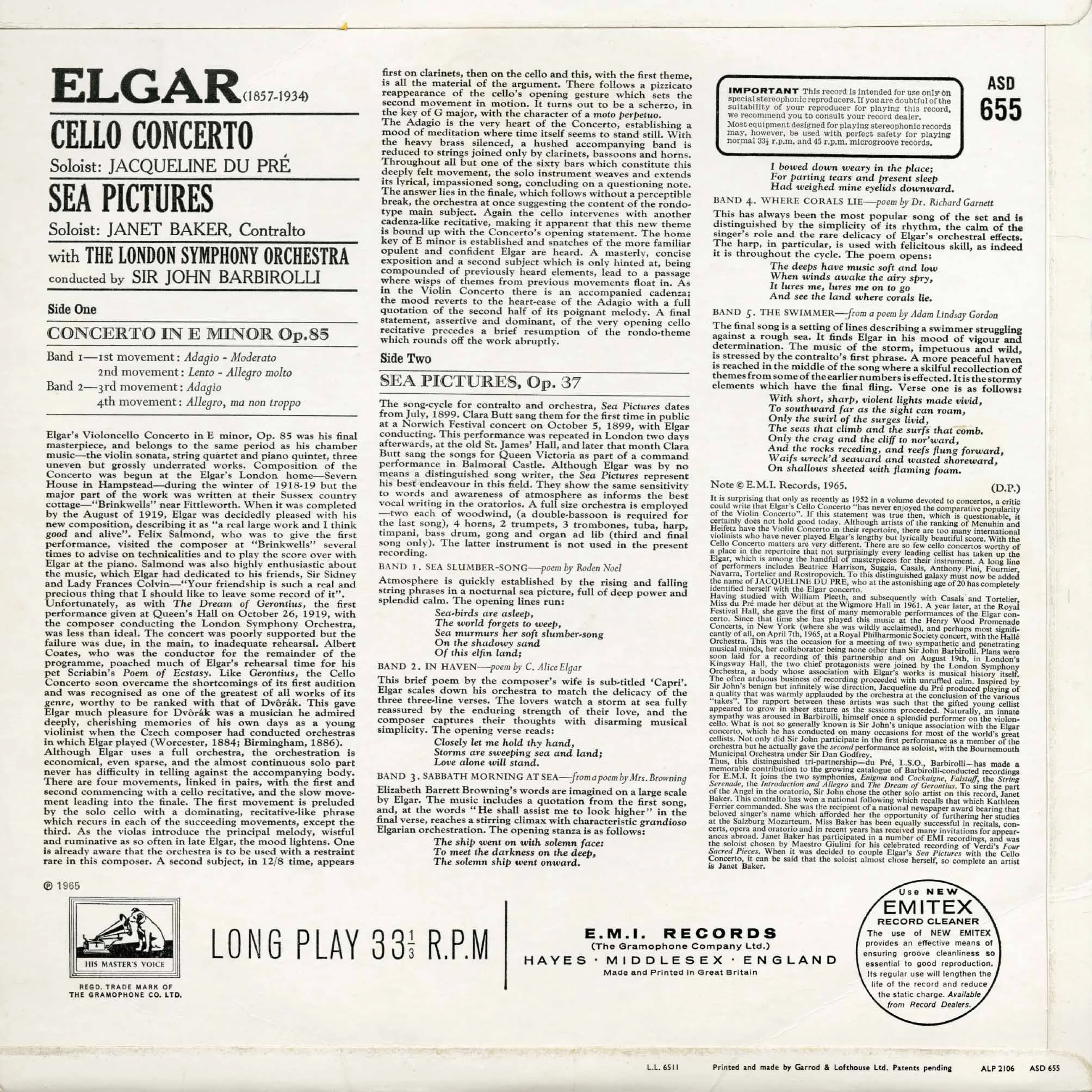
When I tell my audio friends that I review master tape copies of orchestral recordings from the early days of high-quality stereo recording, such as this one from 1965, it often sparks a controversial discussion. Some classical music fans say that many older recordings are outdated or old-fashioned. Other listeners, however, celebrate these high-quality historical documents. Reason enough to clarify this with an impressive example: What were the goals of Edward Elgar, Jacqueline du Pré, Janet Baker, Sir John Barbirolli, and the London Symphony Orchestra? How should this recording be classified 60 years later?
Jacqueline du Pré plays her cello with intense physical involvement. The energy of her bowing and her distinctive articulation are means of musical expression and lend her playing a powerful presence that remains palpable even in quiet passages. She is a master at identifying completely with the work in her interpretation. The artist uses vibrato very deliberately. Her tone is warm, close and immediate, but at appropriate moments also floating, which benefits the late Romantic, melancholic character of Edward Elgar's Cello Concerto in E minor, Op. 85. Jacqueline du Pré phrases in large, breathing arcs and works with dynamic contrasts. Her narrative style means that her playing does not seem symphonically austere. The secret of the enduring popularity of her interpretation is certainly helped by the fact that the focus is not on virtuoso showmanship, but on musical intention.
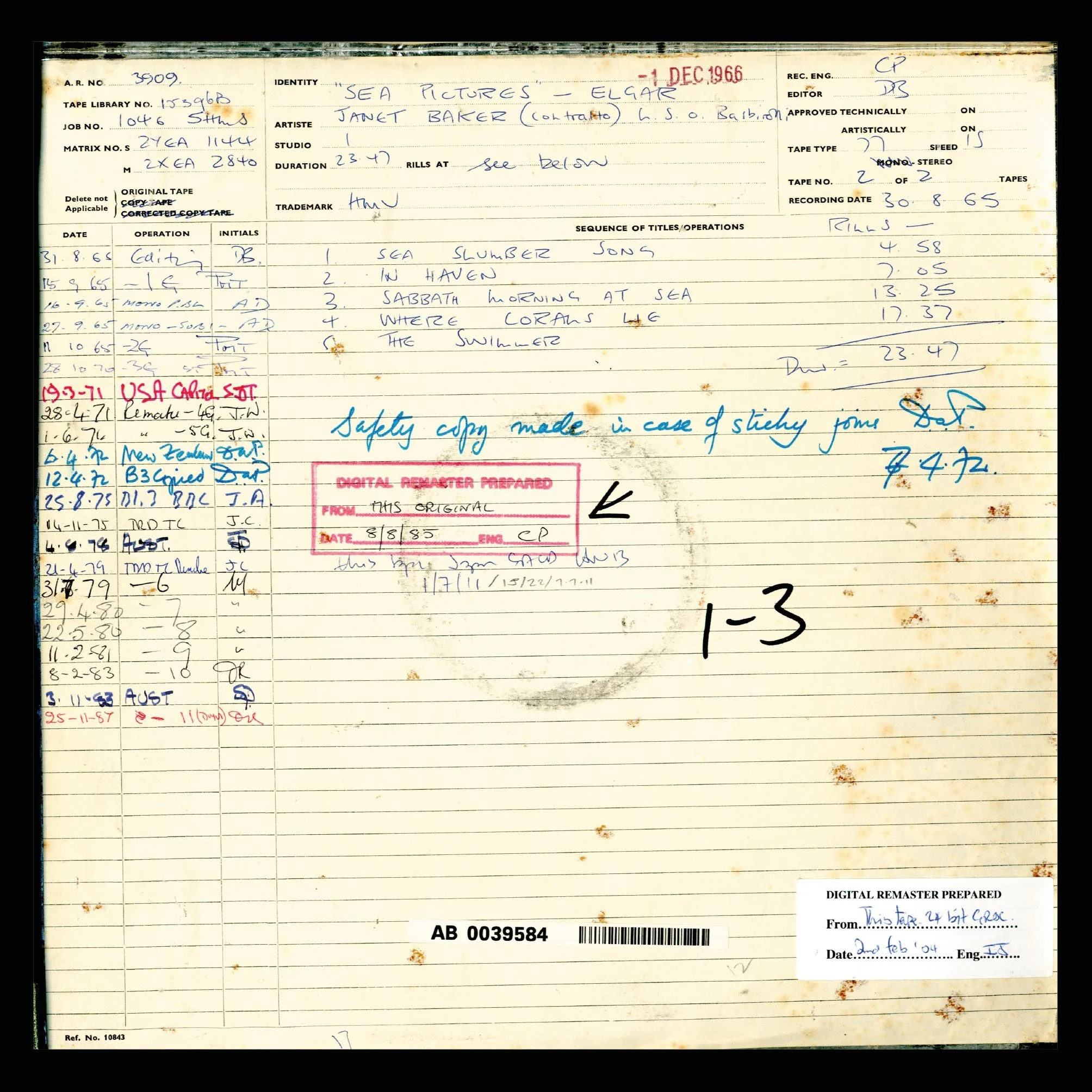
Janet Baker's mezzo-soprano voice lends a special depth to the maritime images in Elgar's composition Sea Pictures, Op. 37. She sings in a dark and noble tone and demonstrates an extraordinary ability to create an atmosphere of deep emotional intensity. Her linguistic clarity and verbal elaboration of nuances are striking. She knows how to render the descriptions of nature in Sea Pictures with great distinctiveness and to convey the images of vastness, longing, and transience in an illustrative manner. Janet Baker works with long, breathing phrases and dynamic moments when the drama of the work requires it. Her interpretation of Sea Pictures, Op. 37, is considered one of the most impressive of this song cycle. She avoids exaggerated effects and comes across as deeply engaging and human.
Both pieces enjoy the status of reference recordings and, even 60 years after the date of recording, are still considered unsurpassed by experts and connoisseurs. As different as the two pieces may be, conductor Sir John Barbirolli, the London Symphony Orchestra, and soloists Jacqueline du Pré and Janet Baker brought all their experience and expertise to bear to present Edward Elgar's compositions in the best possible light and deliver a very insightful and exciting performance to the listener.
In terms of sound and dynamics, the master tape copy is very well balanced. The vocals, cello, and other solo instruments were beautifully placed in front of the orchestra during production, but at the same time were also excellently integrated into the musical arrangement. In other words, the balance between the cohesive orchestra and the differentiated presentation of voices and instruments was achieved superbly. The low-noise studio master tape copy invites you to enjoy undisturbed listening and the accompanying detailed reproduction of quiet passages. One advantage of this tape is its great dynamic range. Tutti passages are reproduced effortlessly and in detail.
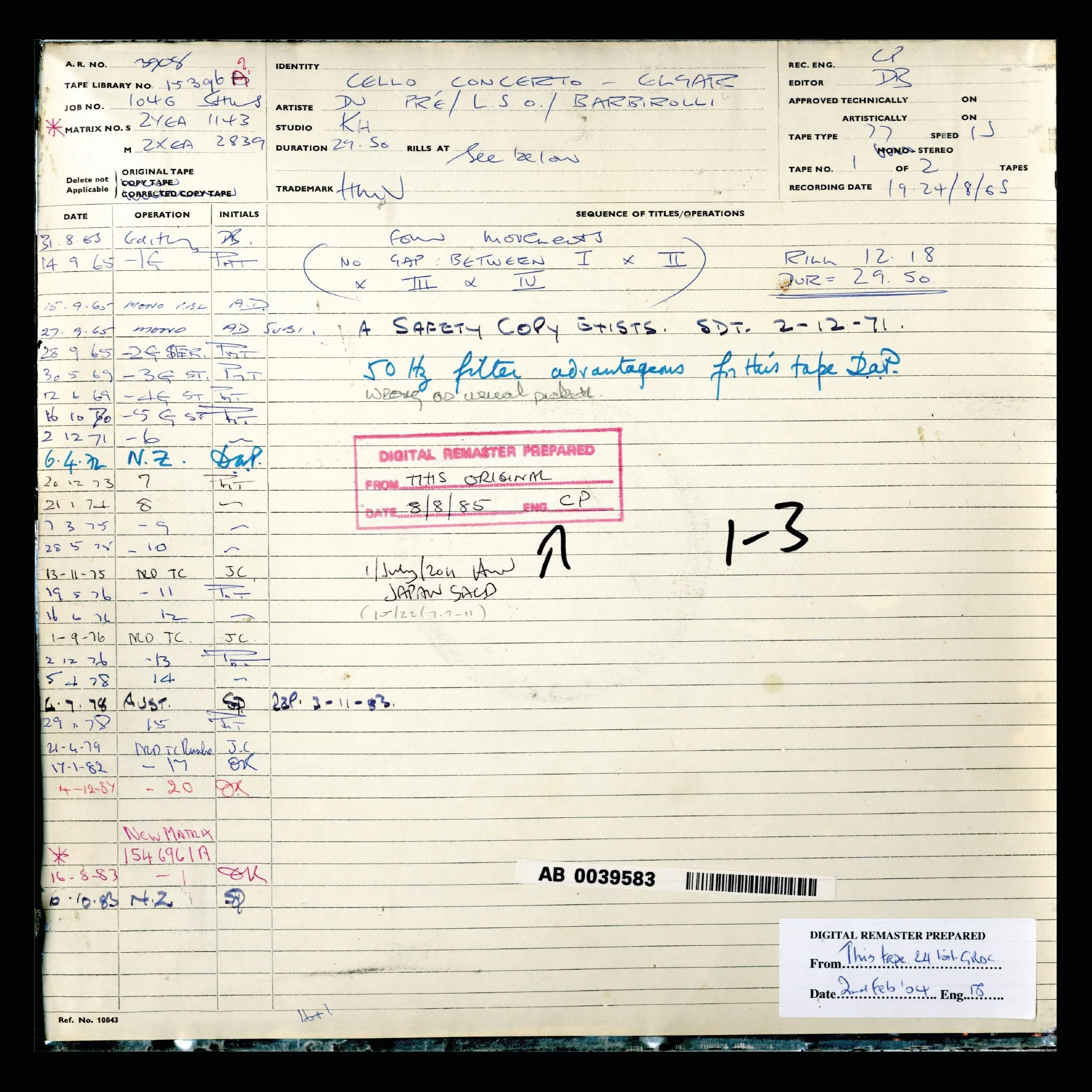
The original tapes are stored in the Warner archives in England. As these tapes were not allowed to leave the country, Abbey Road Studios produced production master tapes that served as the basis for analog remastering by Christoph Stickel (CS Mastering).
For classical music and tape enthusiasts, this spectacular studio master edition from REVOX Horch House completes the opportunity to gain much more direct access to two works in which touching moments come to the fore and become more palpable than with any other playback media I know.
Translated from German with DeepL.com (free version)
Edward Elgar – Cello Concerto & Sea Pictures
Publisher: REVOX Horch House
Playing time: 54 min
Specifications: half track ¼", stereo, RTM SM900, CCIR, 510 nWb/m, 38 cm/s
Reel(s): 2 precision metal reels, printed, with stickers
Packaging: 2 plastic archive boxes, with stickers, 1 cardboard slipcase
Inserts: 1 insert folder with 2 insert sheets and 4 photo prints
Homepage: https://www.horchhouse.com/
Music:

Interpretation:


The entire content and the individual elements of the web page are the intellectual property of Claus Müller and are subject to copyright protection. They may not be copied or imitated in whole or in part by the user; this applies to texts, logos and image components. Any modification, duplication, distribution or reproduction of the website or parts thereof, in any form whatsoever, is not permitted without the prior written consent of Claus Müller.
Der gesamte Inhalt und die einzelnen Elemente dieser Webseite sind geistiges Eigentum von Claus Müller und unterliegen dem Schutz des Urheberrechts. Sie dürfen vom Nutzer weder kopiert noch im Ganzen oder in Teilen imitiert werden; dies gilt insbesondere für Texte, Logos und Bildbestandteile. Jegliche Veränderung, Vervielfältigung, Verbreitung oder Wiedergabe der Webseite sowie Teilen hiervon, gleich welcher Art, ist ohne vorherige schriftliche Zustimmung von Claus Müller nicht zulässig.